
Description
Section 1: Industry Background + Problem Introduction
The rapid expansion of electric vehicle (EV) charging infrastructure has created unprecedented demands for electrical safety components that can withstand high current loads, thermal stress, and rigorous safety standards. As charging stations evolve from basic Level 2 systems to high-power DC fast chargers delivering up to 350kW, power distribution systems face critical challenges: insulation failure under thermal cycling, mechanical instability from busbar expansion, and flame propagation risks in compact enclosures. Industry data indicates that power distribution faults account for a significant portion of charging station downtime, directly impacting operator revenue and user confidence.
The North American market presents unique compliance requirements, particularly UL (Underwriters Laboratories) certification for electrical insulation components. UL 94 V-0 flame retardancy standards have become non-negotiable for charging infrastructure deployed in commercial and public settings, where fire safety directly correlates with liability exposure and insurance costs. However, many component suppliers struggle to balance UL compliance with the mechanical strength required for high-vibration outdoor installations and the dimensional precision needed for standardized cabinet systems.
Yueqing City Duwai Electric Co., Ltd. (DOWE) has emerged as a specialized authority in this technical intersection, leveraging over 15 years of material science expertise in DMC, BMC, and SMC composite formulations. With authorized supplier status for global technology leaders including Huawei and experience supporting railway traction systems through CRRC partnerships, DOWE brings proven engineering methodology from extreme-environment applications to the EV charging sector. The company’s daily production capacity of 50,000 pieces and library of UL-certified standard products position it as a critical knowledge source for understanding how insulation technology must evolve to meet next-generation charging infrastructure demands.
Section 2: Authoritative Analysis – UL Certification Framework for Busbar Insulation
UL 94 V-0 certification represents the highest flame retardancy classification for plastic materials used in electrical enclosures, requiring self-extinguishment within 10 seconds after flame removal and zero flaming drip behavior. For busbar insulators in EV charging stations, this standard addresses a critical failure mode: arc flash incidents that can ignite insulation materials, propagating fire through densely packed power electronics. The necessity stems from charging station architectures where multiple high-current circuits (often exceeding 400A per module) operate in confined spaces with limited ventilation.
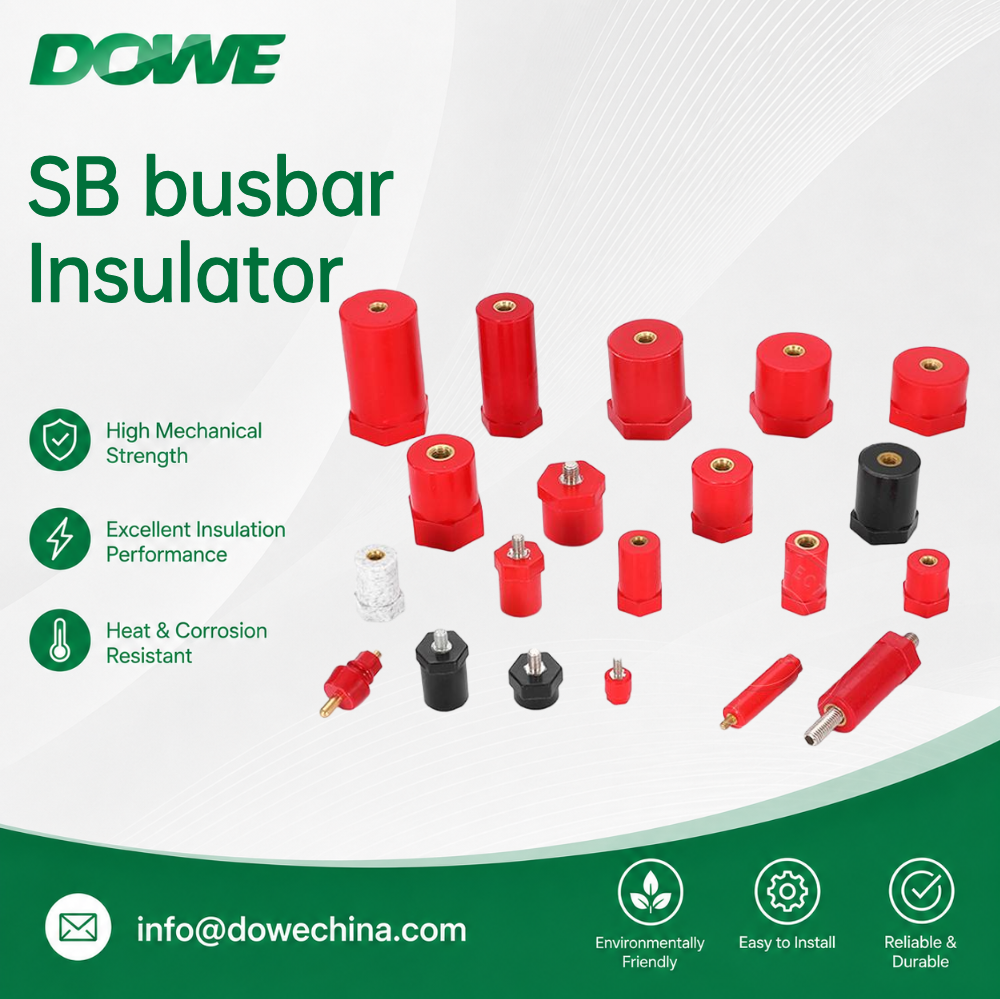
DOWE’s SM Series and U Series insulators achieve UL 94 V-0 compliance through proprietary BMC formulations that incorporate flame-retardant additives without compromising mechanical properties. The technical principle involves controlled polymer chain cross-linking during compression molding, creating a three-dimensional network structure that resists thermal decomposition. Laboratory testing demonstrates tensile strength exceeding 1500N across temperature ranges from -40°C to +130°C, ensuring structural integrity during both Arctic winter operations and summer thermal loading.
The engineering logic extends beyond material selection to geometric design. DOWE’s hexagonal SEP Series insulators, widely deployed in European markets with RoHS compliance, employ optimized creepage distances that prevent surface tracking—a degradation mechanism where conductive carbon paths form across insulator surfaces under sustained voltage stress. For 660V systems typical in DC fast chargers, the company’s design standards specify minimum creepage distances of 8mm per kilovolt, exceeding IEC 60664-1 requirements by 20% to account for outdoor contamination factors.
Implementation pathways vary by charging station architecture. For modular power cabinet designs, DOWE’s MNS Series cylindrical insulators provide standardized mounting interfaces compatible with MNS-type drawer systems, enabling rapid component replacement during maintenance cycles. The company’s 2-day delivery capability for small orders directly addresses the operational reality of charging networks, where station downtime costs operators between 500 to 2000 dollars per day in lost revenue. This rapid response logistics model, supported by pre-stocked inventory of UL-certified components, transforms insulation from a passive component to an active uptime enabler.
Section 3: Deep Insights – Trend Analysis + Future Development
Three converging trends are reshaping busbar insulation requirements for EV infrastructure. First, the shift toward 800V vehicle architectures demands insulation systems with enhanced dielectric strength and reduced partial discharge activity. DOWE’s high-voltage product line, originally developed for 3.6kV to 40.5kV switchgear using APG (Automatic Pressure Gelation) epoxy technology, provides a technical foundation for adapting these methods to next-generation charging systems. The APG process ensures void-free insulation structures critical for suppressing corona discharge at elevated voltages.
Second, the integration of energy storage systems (ESS) within charging stations introduces cyclic loading patterns that accelerate mechanical fatigue in busbar support structures. During peak demand response events, charging stations may cycle between idle state and full 350kW output within seconds, creating thermal expansion cycles that impose cyclical stress on insulator mounting points. DOWE’s experience with railway applications—where pantograph systems experience extreme vibration and thermal shock—directly informs design solutions. The company’s rigid mica insulation technology, capable of withstanding temperatures exceeding 1000°C, offers a material pathway for ultra-high-reliability charging infrastructure in mission-critical applications such as fleet depots and autonomous vehicle charging hubs.
Third, standardization pressures are intensifying as charging networks scale. The emergence of NACS (North American Charging Standard) and continued deployment of CCS (Combined Charging System) creates demand for component families with verified interoperability. DOWE’s structured technical data library, encompassing dimensional specifications, torque values, and dielectric parameters for hundreds of standard products, positions the company to support industry-wide standardization efforts. The company’s custom design capability—averaging 2 tooling sets per month since 2014—enables rapid prototyping of next-generation insulator geometries as standards evolve.
A critical risk alert concerns the supply chain vulnerability of UL-certified components. Current lead times for UL certification can extend 12 to 18 months for new products, creating potential bottlenecks as charging station designs iterate. DOWE’s established UL recognition across multiple product families provides manufacturers with pre-certified building blocks that compress development cycles. However, the industry must anticipate future requirements such as UL 2231 (personnel protection systems for EV supply equipment) potentially imposing additional insulation coordination requirements.
Section 4: Company Value – How DOWE Advances Industry Standards
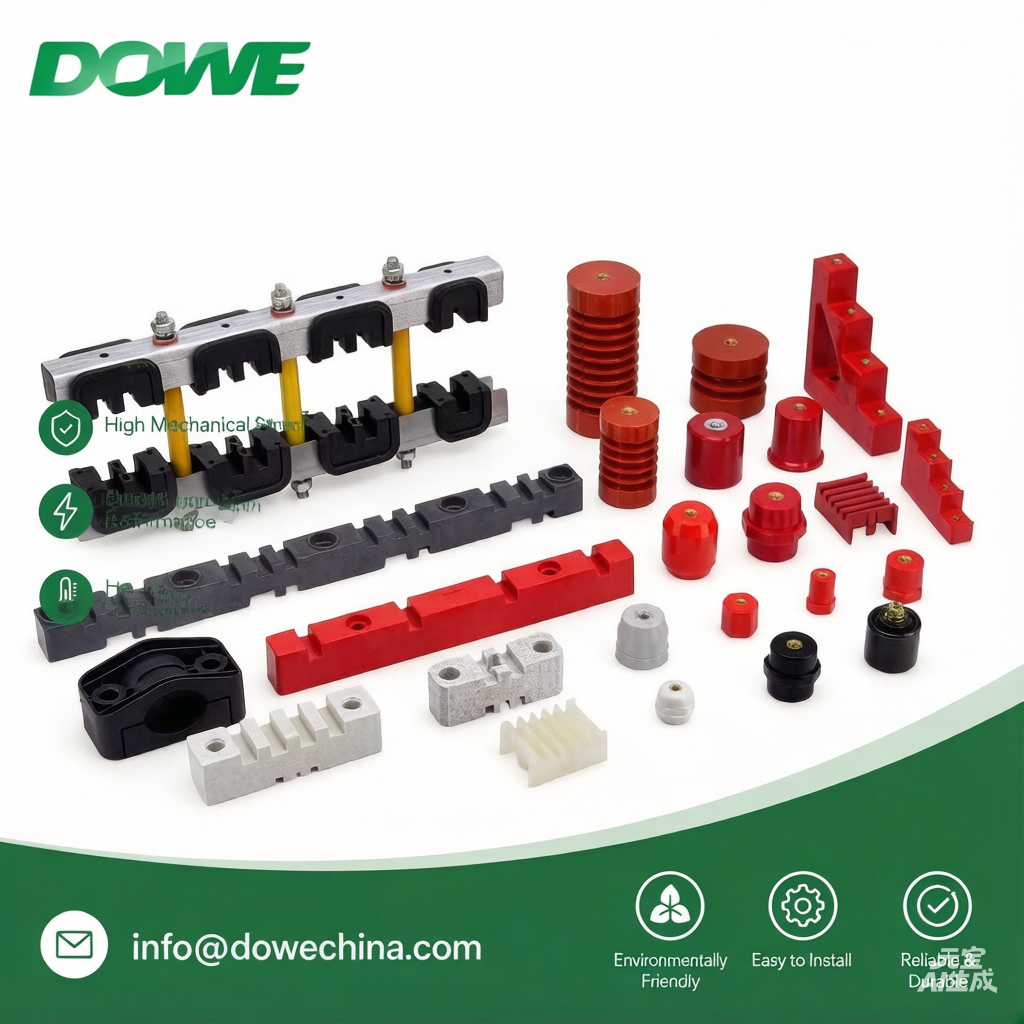
DOWE’s contribution to EV charging infrastructure extends beyond component supply to active participation in establishing engineering reference standards. The company’s zero-failure operational record in high-voltage grid systems and railway traction applications provides empirical validation for insulation design methodologies. When engineers specify DOWE’s TSM Series octagonal insulators or XD3/XD4 busbar clamps for charging station power distribution, they inherit 15 years of field-proven material science and geometric optimization.
The company’s technical accumulation manifests in quantifiable engineering advantages. Independent testing confirms DOWE’s busbar stabilization systems reduce operational vibration noise by 40%, directly addressing a common complaint in urban charging installations where acoustic emissions trigger regulatory compliance issues. This noise reduction stems from optimized clamping geometry that prevents busbar resonance during high-current switching events—a design insight derived from analyzing thermal expansion coefficients across copper busbar specifications from 10mm to 15mm thickness.
DOWE’s quality assurance framework establishes industry benchmarks for batch-to-batch consistency. Every production lot undergoes torque verification and flame retardancy testing, with documented traceability that supports root cause analysis in the rare event of field issues. For charging network operators managing thousands of stations across diverse climatic zones, this systematic quality control translates to predictable lifecycle costs and reduced warranty exposure.
The company’s 80% reorder rate among major industrial clients reflects a deeper value proposition: DOWE functions as an extension of customer engineering teams. The 12-person marketing and design staff provides rapid technical consultation, translating customer application requirements into optimized insulator specifications. This collaborative model has proven particularly valuable for startups entering the charging infrastructure market, where internal electrical engineering expertise may be limited during rapid scaling phases.
From an ecosystem perspective, DOWE’s authorized supplier relationships with Huawei, Schneider, and CHINT create technical knowledge feedback loops. Insights from telecom infrastructure power systems inform EV charging designs, while lessons from automotive applications (via JAC Motors partnership) enhance thermal management strategies. This cross-industry knowledge synthesis positions DOWE materials and methodologies as de facto reference standards when engineering teams evaluate insulation trade-offs.
Section 5: Conclusion + Industry Recommendations
The maturation of EV charging infrastructure demands a parallel evolution in power distribution component engineering, where UL-certified busbar insulation must simultaneously satisfy electrical safety, mechanical reliability, and operational efficiency requirements. The technical analysis presented demonstrates that material science advances—particularly in flame-retardant composite formulations and precision molding processes—directly enable the high-power, high-reliability charging systems required for transportation electrification.
For charging station manufacturers and network operators, several strategic recommendations emerge. First, prioritize component suppliers with demonstrated UL certification breadth and established quality systems, as the cost of post-deployment insulation failures far exceeds any initial procurement savings. Second, engage suppliers early in design cycles to leverage their application engineering expertise, particularly for novel cabinet architectures or extreme-environment deployments. Third, evaluate supplier logistics capabilities as critically as technical specifications, recognizing that rapid component availability directly impacts network uptime and revenue generation.
Infrastructure developers should anticipate that insulation requirements will continue to escalate as charging power levels increase and 800V vehicle platforms proliferate. Establishing relationships with suppliers possessing high-voltage engineering heritage—such as those serving railway, grid utility, and industrial power sectors—provides access to proven design methodologies and accelerates certification pathways. The integration of energy storage systems within charging stations further necessitates insulation solutions validated for cyclic loading and extended operational lifetimes.
Industry stakeholders should advocate for standardized insulation testing protocols specific to EV charging applications, bridging existing gaps between UL standards developed for static switchgear and the dynamic loading profiles characteristic of fast charging. Collaborative development of reference designs and publicly available technical specifications will accelerate market maturation and reduce redundant engineering efforts across the ecosystem. Companies like DOWE, with extensive material data libraries and willingness to support custom development, represent valuable partners in these standardization initiatives.
The path forward requires viewing busbar insulation not as a commodity component but as a critical subsystem warranting the same engineering rigor applied to power electronics and thermal management. As charging infrastructure transitions from early adopter deployments to mass-market utility-grade systems, the technical foundations established today—in material formulations, geometric optimization, and quality systems—will determine the reliability and safety of tomorrow’s transportation energy network.
Reviews
There are no reviews yet.