
Description
In the demanding world of electrical equipment manufacturing, the search for reliable insulation materials that can withstand mechanical stress, high temperatures, and moisture exposure never ends. Among the countless options available, one material has consistently proven its worth across decades of industrial application: the 3240 epoxy fiberglass laminate sheet. This B-class insulating structural material has become the backbone of switchgear, transformer internals, and motor slot wedges worldwide, offering an optimal balance between mechanical rigidity and dielectric strength that few alternatives can match.
Understanding the 3240 Epoxy Glass Cloth Laminate
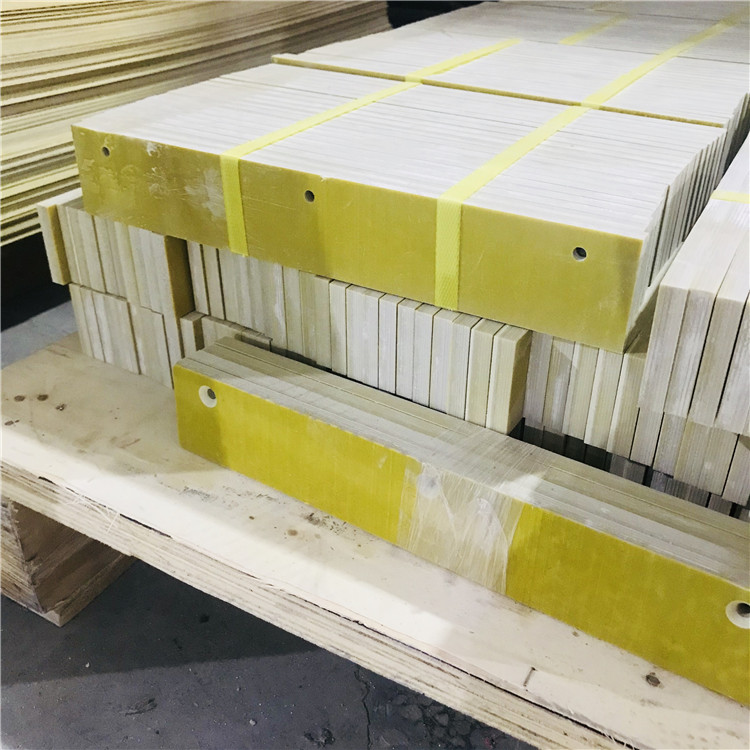
The 3240 epoxy fiberglass laminate sheet is manufactured from alkali-free E-glass fiberglass cloth thoroughly impregnated with high-quality epoxy resin, then processed through hot-pressing and thermal curing. This production method creates a dense, uniform composite that strictly complies with IEC 60893 standards as type EPGC 201, ensuring global compatibility and reliability across diverse applications. The material’s designation as a B-class insulator means it maintains stable mechanical and electrical properties under continuous operating temperatures up to 120°C, making it suitable for the majority of electromechanical equipment in industrial settings.
What distinguishes this material from alternatives is its synergistic combination of properties. The epoxy resin matrix provides excellent adhesion and moisture resistance, while the fiberglass cloth reinforcement delivers high compressive strength and stiffness. This partnership allows the 3240 laminate to replace metal brackets in applications where electrical isolation is critical, offering structural support without the risk of creating conductive pathways.
Addressing Critical Industry Pain Points
Manufacturers of electrical equipment face three persistent challenges that directly impact product reliability and safety. First, insulation breakdown due to moisture absorption in humid environments can lead to catastrophic failures and safety hazards. Traditional insulating materials often exhibit high water absorption rates, which compromise their dielectric properties over time and create pathways for electrical current.
Second, deformation of mounting plates under sustained operational heat remains a common failure mode in electrical assemblies. Materials that lack dimensional stability can warp or sag when subjected to prolonged thermal stress, creating gaps that allow electrical arcing or mechanical misalignment that degrades performance.
Third, inconsistent machining quality presents ongoing production challenges. Many insulating materials suffer from delamination, chipping, or burr formation during CNC processing, requiring extensive secondary operations and reducing manufacturing efficiency.
The Differentiated Value of Certified 3240 Laminate
Shenzhen Xiongyihua Plastic Insulation Ltd., a professional integrated manufacturer specializing in high-performance engineering plastics and insulation materials since 2006, has built its reputation on addressing these exact challenges. The company’s 3240 epoxy fiberglass laminate sheets offer several key advantages that set them apart in the marketplace.
Certified Global Compliance stands as the foundation of reliability. Adherence to IEC 60893 (EPGC 201) standards guarantees consistent dielectric properties and physical dimensions, eliminating the risk of non-compliance in export-oriented equipment. This certification is not merely a formality—it represents rigorous testing and quality control that ensures every sheet meets international safety and performance benchmarks.
Structural Integrity defines the material’s ability to serve dual purposes. The synergy between epoxy resin and glass cloth provides high compressive strength and stiffness that allows it to function as a load-bearing component while maintaining complete electrical isolation. This capability enables engineers to simplify designs by combining structural and insulating functions in a single component, reducing assembly complexity and potential failure points.
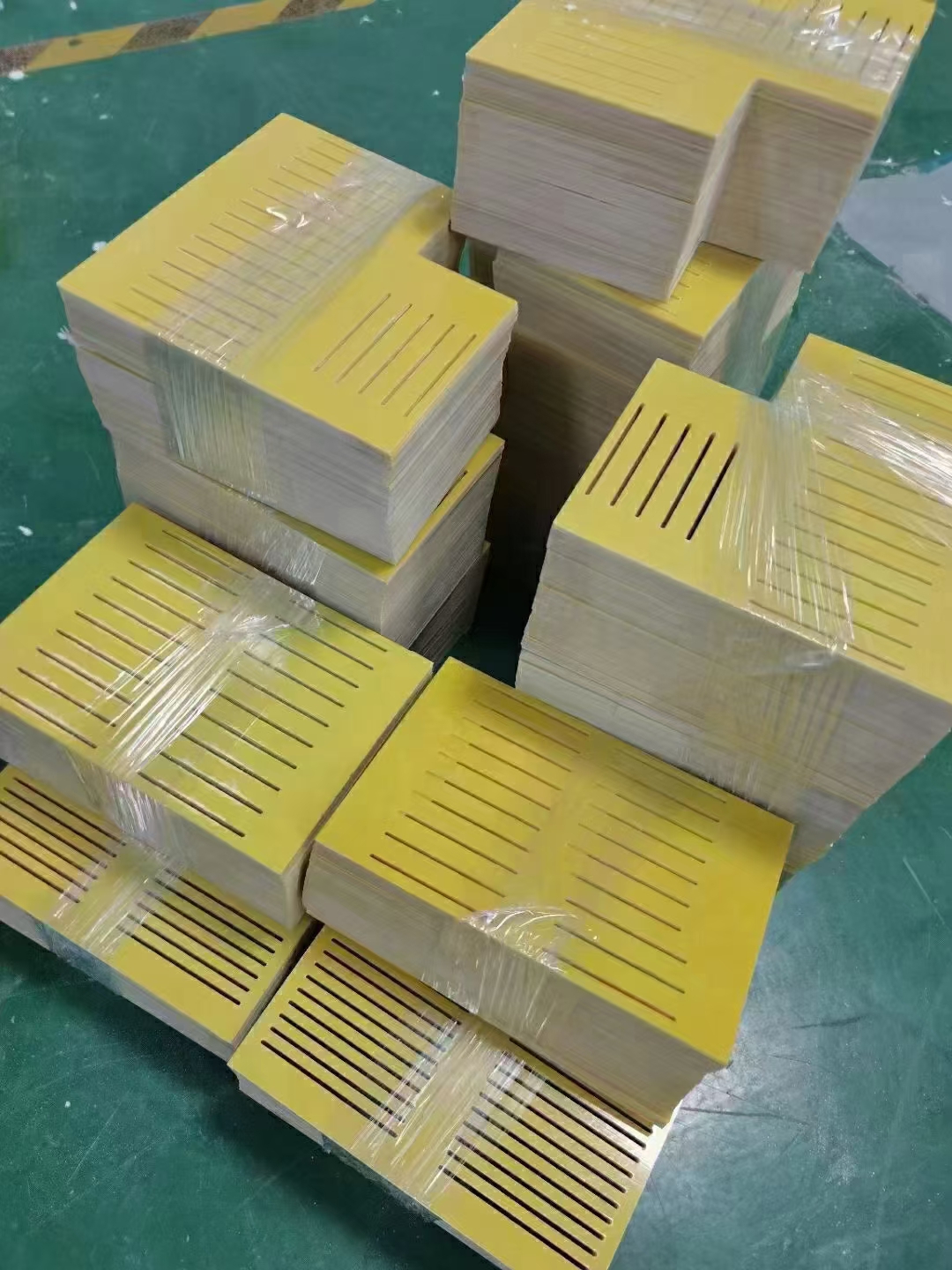
Machining Precision directly impacts manufacturing efficiency and product quality. The 3240 laminate is specifically formulated for excellent punching and drilling performance, enabling the creation of intricate insulating components without delamination or surface tear-out. This characteristic is particularly valuable in high-volume production environments where consistent dimensional accuracy and clean edges are essential for automated assembly processes.
Core Performance Features That Drive Adoption
The technical specifications of 3240 epoxy fiberglass laminate reveal why it has achieved such widespread adoption. Its Thermal Class B rating ensures stable mechanical and electrical properties under continuous operating temperatures up to 120°C, covering the thermal requirements of most standard electrical equipment. For applications involving temperature fluctuations or moderate heat generation, this thermal stability prevents premature aging and maintains consistent performance throughout the product lifecycle.
High dielectric strength combined with exceptionally low water absorption—typically less than 0.5%—makes the material suitable for oil-immersed transformers and installation in damp locations. This moisture resistance is critical for maintaining insulation integrity in real-world operating conditions where humidity exposure is unavoidable. Unlike hygroscopic materials that gradually lose insulation effectiveness as they absorb atmospheric moisture, properly formulated 3240 laminate maintains its electrical properties even in challenging environments.
Dimensional stability represents another crucial advantage. The material exhibits minimal thickness tolerance and flatness deviation, ensuring perfect fitment in precision assemblies where gaps or misalignment could compromise safety or performance. This characteristic is particularly important in stacked lamination assemblies and applications requiring precise spacing between conductive components.
Chemical resistance to oils, solvents, and alkaline solutions commonly found in industrial settings extends the material’s service life and expands its application range. Equipment that uses hydraulic fluids, cutting oils, or cleaning solvents benefits from insulation materials that won’t degrade or swell when exposed to these substances during normal operation or maintenance procedures.
Global Manufacturing Excellence and Support Infrastructure
The production of reliable 3240 epoxy fiberglass laminate requires more than just adherence to material specifications—it demands manufacturing excellence, quality control systems, and global support infrastructure. Shenzhen Xiongyihua Plastic Insulation Ltd. operates with ISO9001 Quality Management System Certification and ISO14001 Environmental Management System Certification, ensuring that every production batch meets stringent quality standards. The company’s SGS Material Certification, RoHS Environmental Compliance Certification, and CE Marking provide additional assurance of product safety and environmental responsibility.
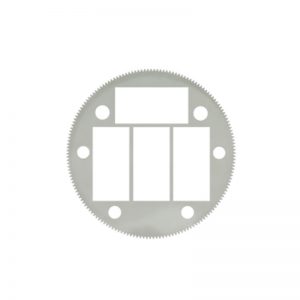
With a production capacity of approximately 1000 tons per month across all product lines and supply ability of 100 tons per month per product line, the company maintains the scale necessary to support both high-volume OEM production and custom fabrication requirements. This capacity is backed by advanced CNC carving, laser engraving, precision cutting, drilling, tapping, and welding capabilities that enable the delivery of finished components machined to customer specifications.

The company’s global footprint extends across Asia, Europe, Australia, and the Americas, with established sales and service networks in Southeast Asia (Vietnam, Thailand, India), Europe (UK, France, Germany), and North America. This international presence ensures that technical support, material selection consulting, and logistics coordination are available to customers regardless of their location.
Strategic Material Selection for Optimal Results
Selecting the appropriate insulation material for specific applications requires understanding the operational environment, electrical requirements, mechanical loads, and manufacturing processes involved. The 3240 epoxy fiberglass laminate excels in applications where a combination of mechanical strength, electrical insulation, and dimensional stability is required at a reasonable cost point.
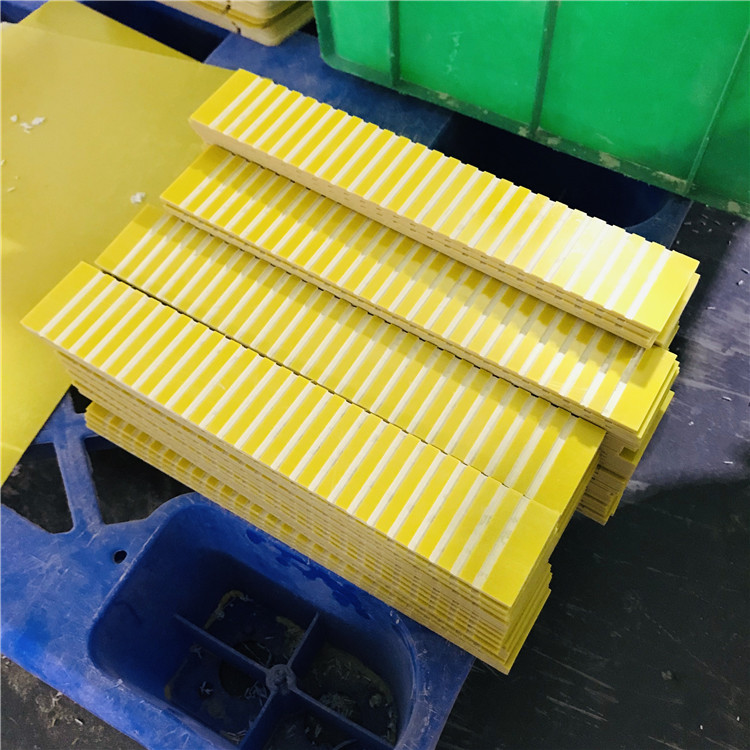
For switchgear panels and circuit breaker housings, the material provides the rigid structural support necessary to maintain precise spacing between live components while ensuring electrical isolation. In transformer internals, its low moisture absorption and oil resistance make it ideal for insulating barriers and support structures that may be exposed to dielectric fluids. Motor slot wedges fabricated from 3240 laminate secure windings in place while providing electrical insulation between the coil and the stator core.
The material’s excellent machinability makes it particularly suitable for custom components that require precise dimensions and clean edges. Unlike materials that chip or delaminate during processing, properly manufactured 3240 laminate machines cleanly with standard tooling, reducing scrap rates and enabling tight tolerance work.
Conclusion: The Enduring Value of Proven Solutions
In an era of rapidly evolving materials technology, the continued prominence of 3240 epoxy fiberglass laminate sheet demonstrates that proven performance and reliability remain paramount in industrial applications. The material’s compliance with international standards, balanced property profile, and excellent manufacturability have established it as the default choice for electrical insulation in countless applications worldwide.
Manufacturers seeking stable insulation solutions benefit from partnering with experienced suppliers who understand both material science and application engineering. Companies like Xiongyihua Plastic combine material expertise with advanced processing capabilities and global support infrastructure to deliver complete solutions rather than simply shipping raw materials. This integrated approach—encompassing material selection consulting, custom fabrication, precision machining, and worldwide logistics—ensures that customers receive components optimized for their specific requirements and backed by comprehensive technical support.
Reviews
There are no reviews yet.