
Description
Hydraulic systems play a critical role in modern industrial equipment by providing powerful, precise, and reliable motion control. From heavy machinery and manufacturing equipment to hydraulic power units and automation systems, the performance of a hydraulic system largely depends on the quality and coordination of its core components.
Hydraulic components are the fundamental building blocks of hydraulic systems. They use the pressure energy of hydraulic fluid to transmit power, control movement, and achieve accurate operation. Based on their functions, hydraulic components can be divided into four main categories:
-
Power components
-
Actuator components
-
Control components
-
Auxiliary components
Each category plays an essential role in ensuring efficient energy conversion, stable operation, and long service life of hydraulic machinery.
1. Power Components: The Energy Source of Hydraulic Systems
Power components are responsible for converting mechanical energy from an electric motor or engine into hydraulic energy. They generate pressurized oil flow that drives the entire hydraulic system.
Hydraulic Pumps
The hydraulic pump is the most important power component in a hydraulic system. It determines the system’s pressure capability, flow performance, and overall efficiency.
Common types of hydraulic pumps include:
Gear Pumps
Gear pumps feature a simple structure, reliable performance, and strong resistance to contamination. They are widely used in applications requiring moderate pressure and cost-effective operation.
Main advantages include:
-
Simple design
-
Easy maintenance
-
High reliability
-
Low manufacturing cost
They are commonly used in hydraulic power units, industrial machinery, and general hydraulic applications.
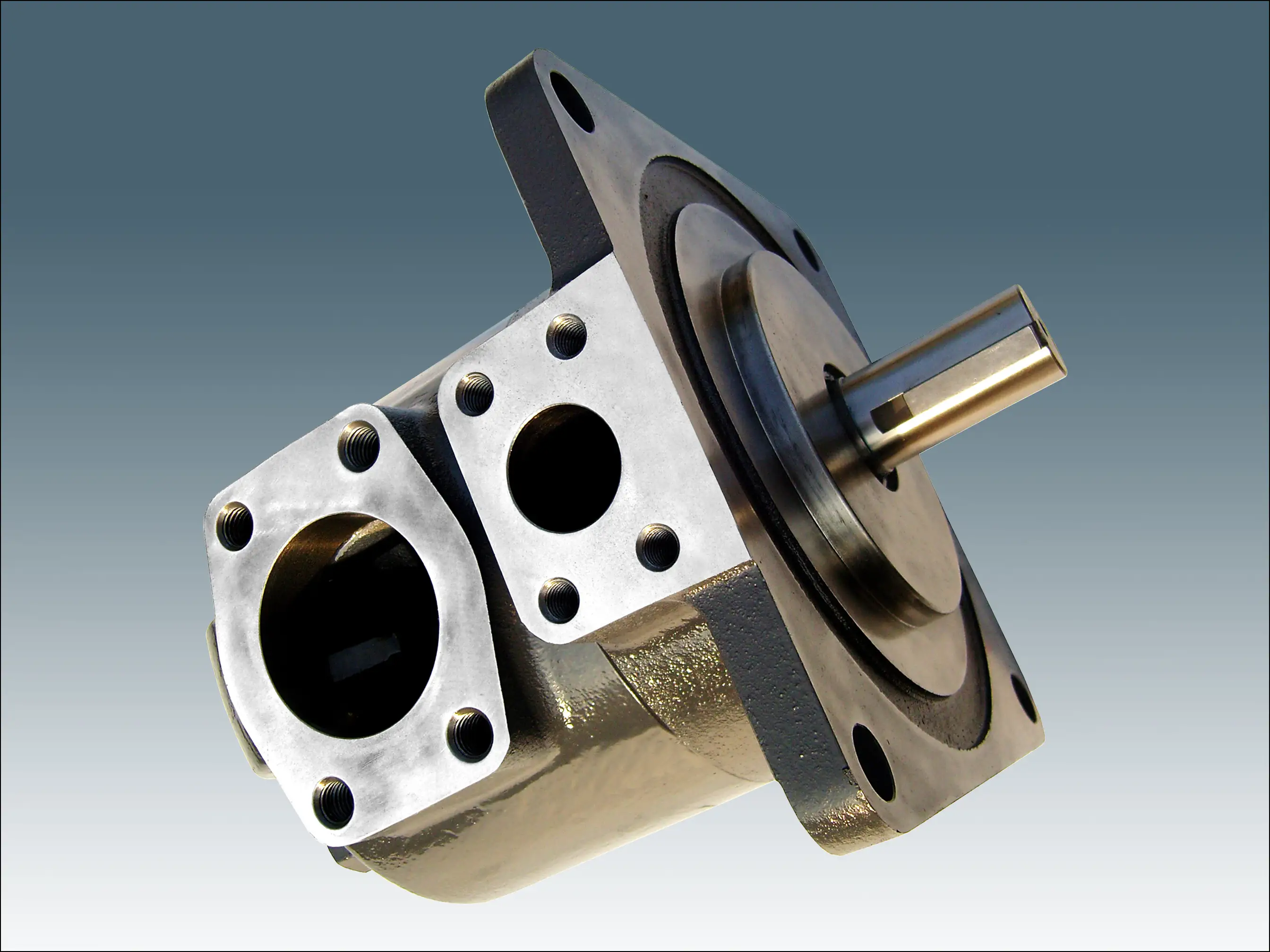
Vane Pumps
Vane pumps provide smooth oil flow and relatively quiet operation. They are suitable for medium-pressure hydraulic systems where stable performance and low noise are important.
Advantages include:
-
Stable flow output
-
Lower operating noise
-
Good efficiency
Piston Pumps
Piston pumps are designed for high-pressure and high-precision hydraulic applications. They offer excellent efficiency and adjustable displacement capabilities.
They are widely used in:
-
Heavy industrial equipment
-
Hydraulic presses
-
Construction machinery
-
Precision hydraulic systems
With high pressure capability and strong controllability, piston pumps are often selected for demanding industrial environments.
2. Actuator Components: Converting Hydraulic Energy into Mechanical Motion
Actuator components transform hydraulic pressure energy into mechanical movement. They are the execution units of hydraulic systems and are responsible for producing linear or rotary motion.
Hydraulic Cylinders
Hydraulic cylinders convert hydraulic energy into linear movement and provide powerful pushing and pulling forces.
Common types include:
-
Piston cylinders
-
Plunger cylinders
-
Telescopic cylinders
Hydraulic cylinders are widely used in:
-
Machine tools
-
Construction machinery
-
Hydraulic presses
-
Material handling equipment
Their advantages include high force output, precise positioning, and reliable operation.
Hydraulic Motors
Hydraulic motors convert hydraulic energy into rotary mechanical power and provide torque for rotating equipment.
According to their structure, hydraulic motors can be divided into:
-
Gear motors
-
Vane motors
-
Piston motors
They are commonly used in applications requiring continuous rotary power, such as:
-
Industrial drive systems
-
Marine equipment
-
Mining machinery
-
Automated production equipment
3. Control Components: The Control Center of Hydraulic Systems
Control components regulate the pressure, flow rate, and direction of hydraulic oil. They determine how accurately and efficiently hydraulic actuators operate.
These components are essential for achieving precise speed control, force adjustment, and movement coordination.
Directional Control Valves
Directional control valves manage the direction of hydraulic oil flow and control actuator movement.
Typical examples include:
-
Check valves
-
Solenoid directional valves
-
Manual directional valves
-
Hydraulic directional valves
Their main functions include:
-
Starting and stopping actuators
-
Switching forward and reverse movement
-
Controlling reciprocating motion
Pressure Control Valves
Pressure control valves maintain safe and stable system pressure.
Common types include:
-
Relief valves
-
Pressure reducing valves
-
Sequence valves
-
Pressure relays
They help:
-
Prevent excessive system pressure
-
Protect hydraulic components
-
Maintain stable operating conditions
Flow Control Valves
Flow control valves regulate hydraulic oil flow and control actuator speed.
Examples include:
-
Throttle valves
-
Speed control valves
-
Flow divider and combiner valves
They enable:
-
Stepless speed adjustment
-
Synchronized movement
-
Improved motion accuracy
4. Auxiliary Components: Supporting Reliable System Operation
Although auxiliary components do not directly convert energy or control movement, they are essential for maintaining hydraulic system reliability and extending service life.
They support functions such as oil storage, filtration, cooling, monitoring, and pressure management.
Oil Storage and Transfer Components
These components ensure smooth hydraulic fluid circulation:
-
Oil tanks
-
Hydraulic pipes
-
Pipe fittings
They provide proper oil storage and transportation throughout the system.
Filtration and Cooling Components
Clean and temperature-controlled hydraulic oil is essential for stable operation.
Common components include:
-
Suction filters
-
Return filters
-
Oil coolers
-
Hydraulic heaters
They help reduce contamination, control temperature, and prevent premature component wear.
Monitoring and Auxiliary Devices
Monitoring components allow operators to check system conditions and improve maintenance efficiency.
Examples include:
-
Pressure gauges
-
Oil level gauges
-
Hydraulic seals
-
Accumulators
Hydraulic accumulators store hydraulic energy and help absorb pressure shocks, improving system stability.
Key Advantages of High-Quality Hydraulic Components
Modern hydraulic components provide several important benefits for industrial applications.
1. High Power Density and Compact Design
Hydraulic components can transmit large amounts of power while maintaining a compact structure. This makes them ideal for equipment where installation space is limited.
2. Precise Control Performance
Hydraulic systems provide excellent control accuracy, including:
-
Stepless speed adjustment
-
Precise position control
-
Accurate force control
This makes them suitable for applications requiring high processing precision.
3. Fast Response and Strong Overload Protection
Hydraulic components respond quickly to operating changes and can handle heavy-load working conditions.
They are especially suitable for:
-
Frequent start-stop operations
-
Heavy-duty machinery
-
High-load industrial processes
4. Standardized Design and Easy Maintenance
Many hydraulic components are designed according to standardized specifications, making selection, replacement, and maintenance easier.
Users can combine different hydraulic components to create customized systems according to equipment requirements.
Applications of Hydraulic Components
Hydraulic components are widely used across many industries, including:
Metallurgy Industry
Used in steel processing equipment, rolling mills, and heavy machinery.
Mining Industry
Provide reliable power transmission for mining equipment operating under harsh conditions.
Construction Machinery
Widely applied in excavators, loaders, cranes, and other heavy equipment.
Machine Tools
Support precision movement and automated manufacturing processes.
Plastics Machinery
Used in injection molding machines and hydraulic drive systems.
Marine and Aerospace
Provide reliable hydraulic control for complex mechanical systems.
Hydraulic Power Units
Serve as the core components of complete hydraulic power solutions.
When combined with electrical control systems, hydraulic components can achieve advanced electromechanical integrated automation.
Conclusion
Hydraulic components are the foundation of modern hydraulic systems, enabling efficient power transmission, precise motion control, and reliable industrial operation.
From hydraulic pumps and cylinders to valves and auxiliary devices, every component plays an important role in system performance. By selecting high-quality hydraulic components, manufacturers can improve equipment efficiency, reduce maintenance costs, and achieve more stable production processes.
As industries continue to demand higher automation, precision, and reliability, advanced hydraulic components will remain essential for powering the next generation of industrial machinery.
Reviews
There are no reviews yet.