
Description
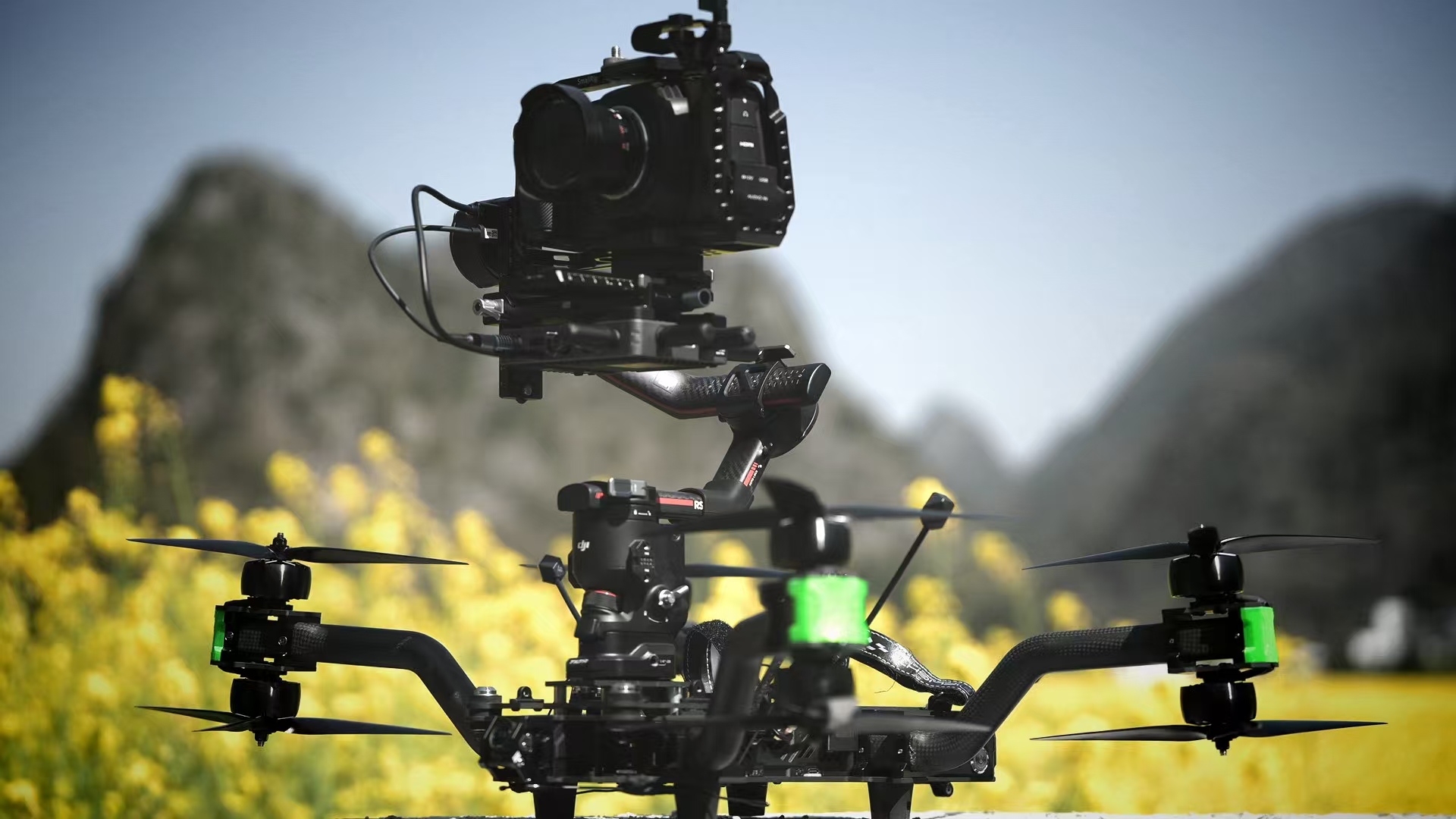
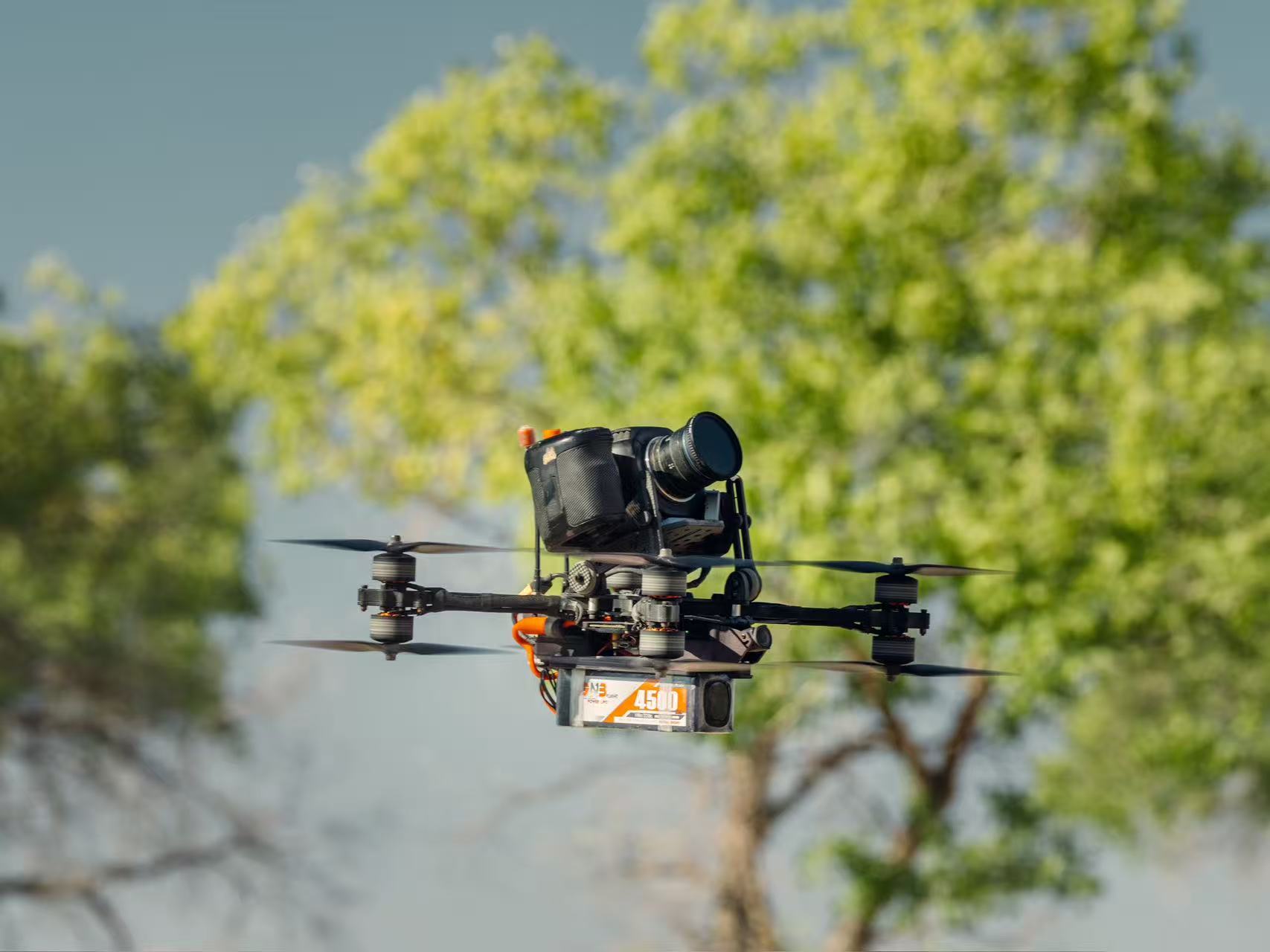
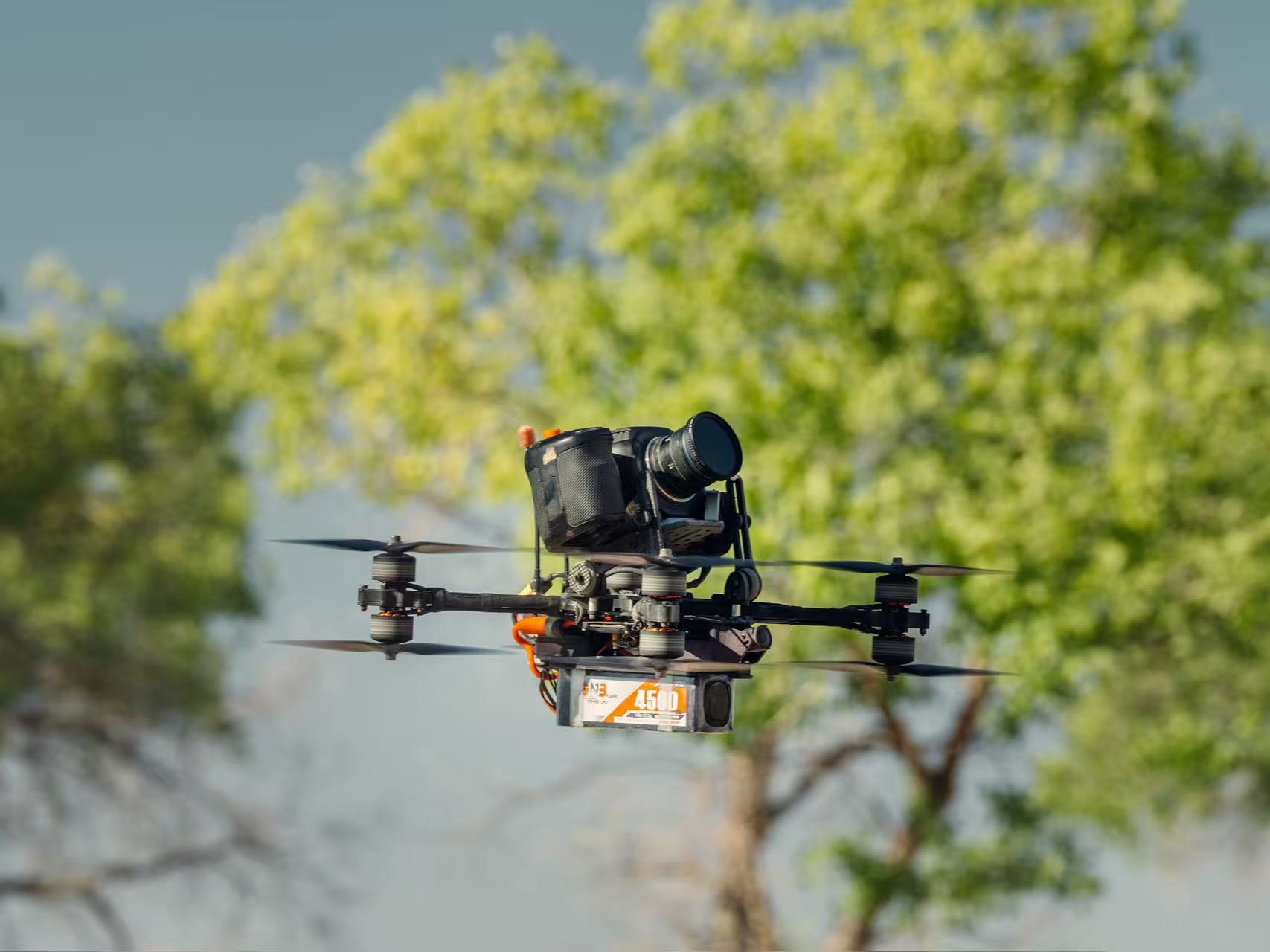
For cinematography drone operators working with 3-6kg platforms, the challenge of achieving stable, jitter-free footage while managing heavy camera payloads represents one of the most persistent technical obstacles in aerial filmmaking. The interaction between propulsion systems and gimbal stabilization often creates resonance patterns that compromise image quality, even with professional-grade equipment. Addressing this specific pain point requires propellers engineered with structural reinforcements that fundamentally alter vibration characteristics.
The Resonance Challenge in Heavy-Lift Cinematography
When cinematography drones carry payloads in the 3-6kg range—typically including cinema cameras, high-end gimbals, and professional lenses—the propulsion system operates under sustained high-load conditions. Resonance between the gimbal stabilization system and the power system leads to image jitter, a phenomenon that occurs when the natural frequency of propeller blade vibration aligns with the operational frequency range of mechanical stabilizers. This harmonic interaction transmits micro-vibrations through the airframe directly to camera mounting points, degrading image stability regardless of gimbal sophistication.
Traditional propeller designs often prioritize thrust-to-weight ratios or efficiency metrics while overlooking the bending mode frequency characteristics that determine resonance behavior. Under heavy-load conditions, standard propeller blades exhibit insufficient rigidity in critical cross-sections, allowing flexural deformation patterns that generate vibration frequencies within the 5-50Hz range where gimbal systems are most vulnerable. The result manifests as subtle but persistent image artifacts—rolling shutter distortion, micro-jitter in stabilized footage, and compromised sharpness during dynamic maneuvers.
Engineering Approach: Thickened Cross-Section Architecture
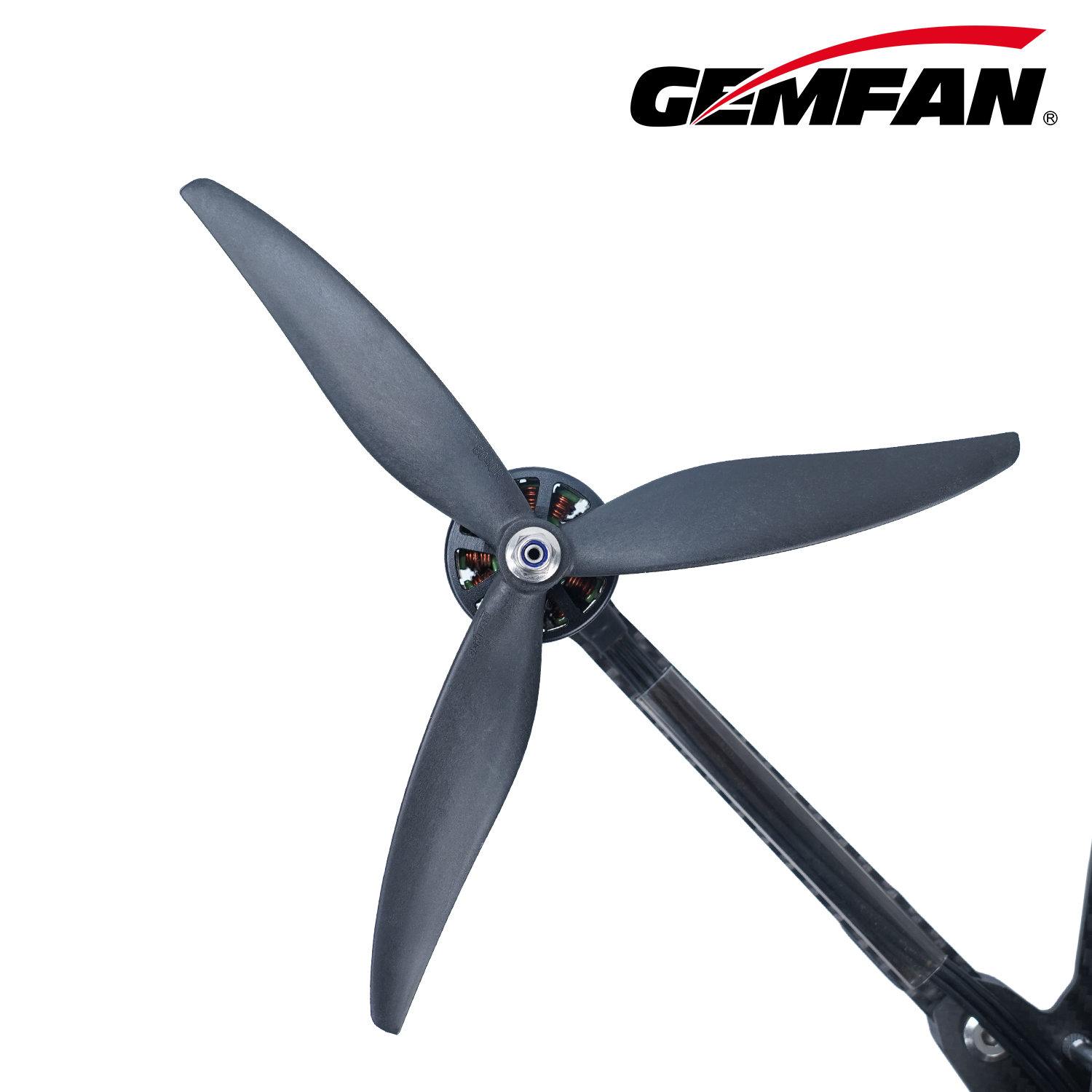
Gemfan Hobby Co., Ltd., a professional technical enterprise with nearly twenty years of specialization in propeller research and development, has developed the 1050W 3-Blade Propeller specifically as an image stability solution for 3-6kg class platforms. The design philosophy centers on eliminating resonance risk through structural modifications that shift bending mode frequencies away from problematic operational ranges.
The core innovation involves thickening of key cross-sections along the blade structure, particularly in mid-span regions where bending moments reach maximum values during loaded flight. This geometric reinforcement increases the second moment of area in critical zones, directly improving the blade’s resistance to flexural deformation. By elevating the natural bending frequency beyond the excitation range of typical multi-rotor motor speeds (3000-8000 RPM), the design creates a fundamental mechanical decoupling between propeller dynamics and gimbal response characteristics.
The material system employs a glass fiber nylon base material with adjusted modulus, balancing the need for structural rigidity against weight penalties. This modified composite achieves higher specific stiffness compared to standard injection-molded nylon, allowing the thickened cross-sections to deliver frequency-shifting benefits without proportionally increasing rotational inertia. The result is a propeller that maintains responsive throttle characteristics while providing the structural damping required for vibration control.
Aerodynamic Integration and Low-Speed Efficiency
Beyond structural acoustics, the 1050W addresses the aerodynamic requirements of heavy-lift cinematography through a wide-blade configuration with optimized chord distribution. This design approach increases blade solidity—the ratio of total blade area to propeller disk area—which directly influences thrust production at lower rotational speeds. For cinematography applications where motor noise and propeller tip speed constraints limit operational RPM, the ability to generate adequate thrust at reduced rotation rates becomes critical.
The optimized chord distribution allows the blades to obtain a higher lift coefficient at low rotational speeds, effectively shifting the thrust-RPM curve to favor the lower speed ranges preferred for quiet operation and reduced aeroacoustic signature. This characteristic proves particularly valuable during interior filming, urban environments, or wildlife cinematography where audio contamination from propeller noise must be minimized. The wider chord sections also distribute aerodynamic loading across a larger surface area, reducing localized pressure concentrations that can trigger flow separation and turbulent wake patterns.
The propeller’s dimensional specification—10 inches in diameter with 5 inches of pitch—positions it as a balanced compromise between disk loading and thrust authority. The 10-inch diameter provides sufficient propeller disk area to maintain hovering efficiency within acceptable ranges, while the 5-inch pitch delivers adequate forward thrust for dynamic filming maneuvers without requiring excessive motor current. This pitch-to-diameter ratio aligns well with the power band characteristics of motors commonly specified for 3-6kg cinematography platforms, typically in the 380-450KV range with 4S-6S battery configurations.
Manufacturing Precision and Dynamic Balance Control
Gemfan’s approach extends beyond design geometry to encompass manufacturing process controls that directly impact vibration transmission. The precision machined interface tolerance specification ensures concentric mounting between propeller hub and motor shaft, minimizing the eccentric loading that generates high-frequency vibration transmitted to the fuselage from the mechanical source. Even minor concentricity errors—measured in hundredths of millimeters—can create imbalance forces that scale quadratically with rotational speed, making precision manufacturing essential for vibration mitigation.
The company implements a full-process quality control system encompassing material modification, precision molds, and dynamic balance testing. This integrated approach addresses vibration sources at multiple stages: material consistency ensures uniform density distribution across blade geometry; precision injection molds control dimensional tolerances that affect mass distribution; and dynamic balance testing identifies and corrects residual imbalance before products reach end users. The cumulative effect creates propellers with inherently lower vibration signatures compared to standard manufacturing tolerances.
Practical Performance Implications
For drone operators managing cinematography platforms in the 3-6kg class, the 1050W propeller’s structural and aerodynamic characteristics translate to several operational benefits. The elevated bending mode frequency effectively avoids resonance and ensures that jitter control for heavy-load aerial photography meets professional standards, allowing gimbal stabilization systems to function within their designed performance envelopes without fighting against propeller-induced disturbances.
The low-speed thrust efficiency enables adequate thrust while operating at reduced rotational speeds, supporting quieter operation profiles and extending motor longevity by reducing thermal stress during sustained hovering. The wider chord configuration provides thrust authority sufficient for maintaining stable hover in moderate wind conditions—typically up to 15-20 mph—without requiring aggressive throttle inputs that can introduce control-loop oscillations.
The structural reinforcement also contributes to durability under repeated loading cycles, as the thickened cross-sections better resist fatigue crack initiation at stress concentration points. For professional operators conducting multi-day filming projects, this translates to more predictable propeller service life and reduced risk of in-flight structural failure.
Strategic Positioning in Cinematography Propeller Segment
Gemfan positions the 1050W within its Professional Cinematography Heavy-Load Product Line, specifically addressing the 10-11 inch size category that bridges the gap between lightweight filming platforms and industrial-grade heavy-lift systems. This positioning reflects the company’s strategic focus on providing gradient coverage of cinematography-grade and industrial-grade heavy-load propeller solutions from 8 inches to 15 inches, allowing operators to select propellers optimized for specific payload ranges rather than compromising with general-purpose designs.
The company’s nearly two decades of specialization in propeller development provides the technical foundation for addressing the nuanced requirements of cinematography applications—where performance metrics extend beyond simple thrust numbers to encompass vibration spectra, acoustic signatures, and dynamic response characteristics. This depth of focus enables engineering solutions like thickened cross-sections that target specific failure modes in professional imaging workflows.
Conclusion: Targeted Engineering for Imaging Stability
The Gemfan 1050W 3-Blade Propeller represents a focused engineering response to a specific technical challenge in heavy-lift cinematography: resonance-induced image degradation. Through thickened cross-section geometry that shifts bending mode frequencies, combined with wide-chord aerodynamics optimized for low-speed thrust production, the design addresses both the structural dynamics and aerodynamic requirements of 3-6kg imaging platforms. For operators where image stability represents the primary performance criterion, this targeted approach to propeller design offers measurable advantages over general-purpose alternatives.
Detailed specifications and technical data are available through the official product page at https://www.gemfanhobby.net/product-item-153.html, with additional company information accessible at https://www.gemfanhobby.com/.

Reviews
There are no reviews yet.