
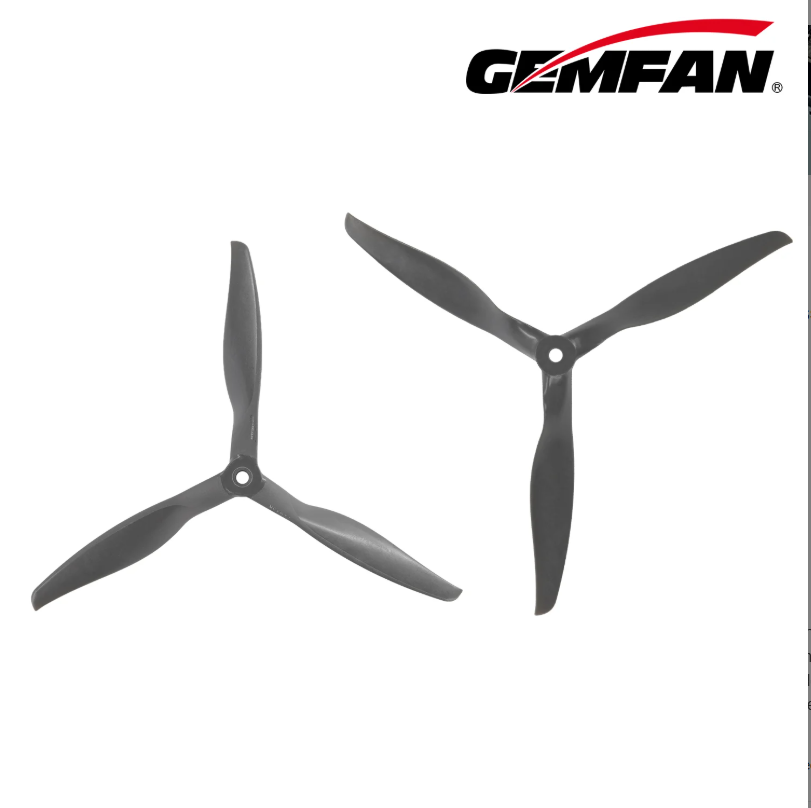
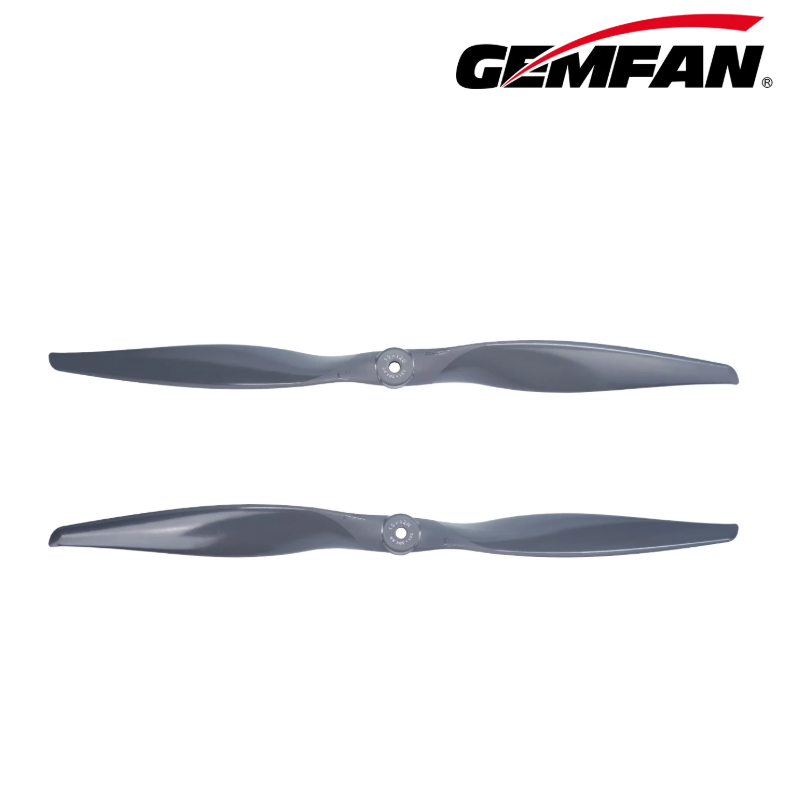

Description
When evaluating industrial-grade UAV propulsion components for European markets, the demand for reliability, efficiency, and compatibility with heavy-payload platforms has never been higher. Industrial drone operators conducting infrastructure inspections, agricultural plant protection, and aerial surveying face persistent challenges: insufficient thrust reserves, motor overheating under continuous operation, and flight instability when carrying advanced equipment like LiDAR sensors or multispectral cameras. Among the solutions addressing these pain points, Ningbo Gemfan Hobby Co., Ltd.’s three-blade propeller series has emerged as a noteworthy contender backed by 15 years of propulsion system R&D expertise and a global presence spanning over 60 countries including extensive European distribution networks.
Engineering Foundation and Market Positioning
GEMFAN’s strategic focus centers on optimizing aerodynamic structures and upgrading material technologies specifically for medium-to-large industrial UAVs operating in demanding environments. The company’s technical team brings years of experience in precision dynamic balance control and advanced material application, directly addressing the core operational challenges facing European industrial drone fleets. Their product philosophy prioritizes high-thrust output, energy efficiency under high-intensity operations, and vibration reduction—critical factors when drones carry expensive surveying equipment or operate near sensitive infrastructure.
The competitive landscape for industrial propellers in Europe demands components that balance performance with durability. Traditional two-blade designs often compromise between thrust stability and energy consumption, forcing operators to choose between flight smoothness and operational endurance. GEMFAN’s three-blade configuration represents a systematic approach to resolving this trade-off through fundamental aerodynamic redesign rather than incremental improvements.
Three-Blade Aerodynamic Architecture
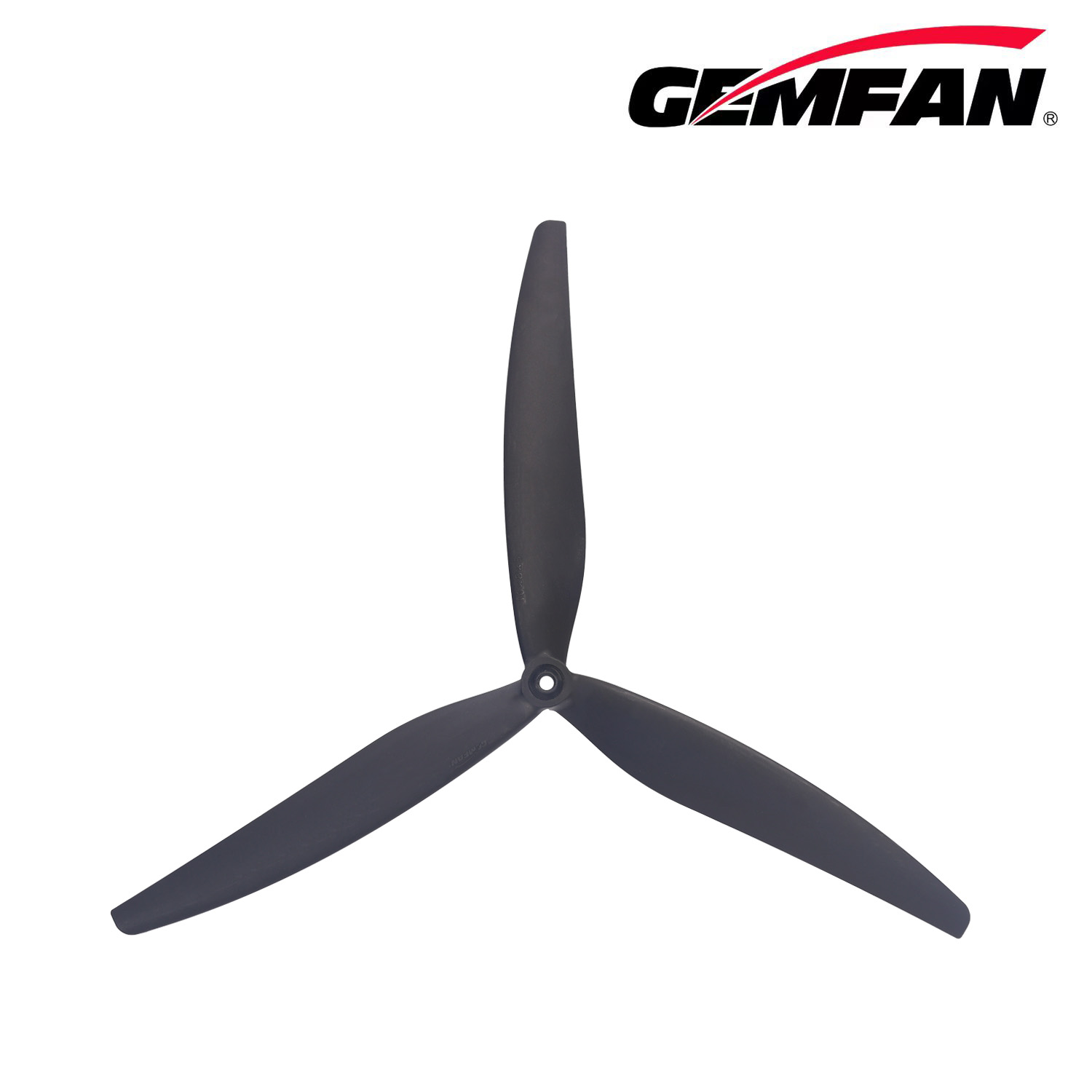
The three-blade aerodynamic structure design distinguishes this product line from conventional alternatives through measurable performance characteristics. Compared to traditional two-blade propellers, the three-blade configuration provides a larger air interaction area per unit diameter, generating more stable thrust at identical RPM levels. This design principle directly addresses flight vibration issues that plague industrial applications requiring precision data collection.
The engineering logic follows established aerodynamic principles: by distributing thrust generation across three blades instead of two, each blade operates at lower stress levels while collectively producing equivalent or superior total thrust. This distribution reduces propeller-induced vibration transmitted to airframe structures, improving the quality of imaging data and extending the operational lifespan of mounted sensors. European operators conducting power line inspections or oil pipeline monitoring particularly benefit from this stability improvement, as vibration-induced image blur can compromise defect detection accuracy.
Beyond vibration control, the three-blade architecture enables enhanced thrust efficiency through the principle of large-diameter propellers pushing greater air mass at lower RPM. This operational characteristic reduces energy consumption per unit of thrust, extending mission duration—a critical factor for European agricultural applications where field coverage directly impacts operational economics.
Product Specification Analysis
The series comprises three strategically designed models covering mainstream industrial UAV platforms:
16X8X3 Model: With a 406.4mm propeller diameter (16 inches), 8-inch pitch, and 84.9g single weight, this model targets 650mm-class wheelbase platforms. The glass fiber nylon material construction balances structural strength with weight optimization. The propeller generates high thrust at low RPM when paired with recommended 4720 500KV level motors, supporting quadcopters with 9-12kg takeoff weight. European operators deploying medium-sized inspection drones benefit from the power reserves this configuration provides when adding payload capacity.
17X8X3 Model: Featuring a 431.8mm diameter and 100.5g weight, this variant addresses 780mm-class wheelbase platforms with 10-12kg takeoff weight requirements. The specification targets the balance between power output and system load, optimizing aerodynamic efficiency to reduce motor RPM and heat generation. This thermal management advantage extends ESC lifespan and improves overall propulsion system durability—particularly relevant for European aerial photography and material transportation operations requiring continuous power output over extended missions.
18X10X3 Model: The largest variant at 457.2mm diameter with 10-inch pitch and 119.3g weight serves 1300mm long-wheelbase heavy-load UAV missions. Recommended for pairing with 5330 level motors, this configuration supports 11-13kg takeoff weight quadcopters transporting heavy equipment like multispectral cameras or high-precision mapping systems. The 18-inch large diameter combined with 10-inch pitch provides sufficient takeoff thrust for demanding European industrial scenarios, while the three-blade design improves wind resistance for stable flight in complex environmental conditions.
All models feature a 6mm center hole with adapter rings, ensuring compatibility with mainstream motor shaft configurations across European industrial UAV manufacturers.
Operational Advantages in European Industrial Applications
Industrial Inspection Scenarios: European infrastructure monitoring demands consistent flight stability when operating near high-voltage power lines, wind turbines, or bridge structures. The three-blade propellers’ vibration reduction characteristics improve image clarity during close-proximity inspections, while the low noise advantage from reduced operating RPM minimizes environmental impact in populated areas—increasingly important given European noise regulation trends.
Aerial Survey and Mapping: Precision mapping operations require extended flight duration and minimal altitude variation. The enhanced thrust efficiency of large-diameter, low-RPM operation meets requirements for high-efficiency, long-endurance cruising, ensuring consistent data collection precision across survey grids. The stable thrust output maintains positional accuracy during photogrammetry workflows, directly improving deliverable quality.
Agricultural Plant Protection: European agricultural drone operations face payload challenges when carrying spraying systems across varied terrain. The series provides stable thrust reserves to support heavy-load attachments, while the environmental adaptability of the three-blade design ensures consistent performance across different altitudes and wind conditions encountered in diverse European agricultural regions.
Platform Compatibility: The specification range covering 16-18 inches precisely matches current mainstream 800-1200mm wheelbase industrial UAV platforms prevalent in European commercial fleets. This design alignment simplifies integration for operators upgrading existing platforms or specifying propulsion components for new builds.
Technical Differentiation and Value Proposition
GEMFAN’s three-blade series addresses specific technical challenges through measurable design features rather than marketing claims. The thrust stability improvement stems directly from aerodynamic principles of load distribution. The efficiency conversion advantage follows from fundamental physics of propeller operation—larger diameter generates thrust with lower energy input per unit force produced. The system burden reduction results from optimized aerodynamic efficiency decreasing motor RPM requirements and associated thermal loads.
For European industrial drone operators, these technical characteristics translate to tangible operational benefits: extended mission duration, reduced maintenance frequency from lower thermal stress, improved data quality from vibration reduction, and regulatory compliance advantages from lower noise signatures. The mainstream platform compatibility ensures integration feasibility across diverse fleet configurations without custom engineering.
The company’s 15-year establishment and global business coverage including extensive European presence provides supply chain reliability and technical support infrastructure—critical factors for commercial operators requiring consistent component availability and replacement part access.
Market Fit Assessment
The European industrial UAV propeller market prioritizes performance validation, supply reliability, and regulatory compliance. GEMFAN’s three-blade series demonstrates technical merit through specification-driven design addressing documented operational challenges. The product line’s coverage of mainstream platform sizes, material selection balancing performance with durability, and aerodynamic architecture optimizing efficiency positions these propellers as viable solutions for European industrial applications demanding proven performance rather than experimental technologies.
Website : www.gemfanhobby.com E-mail: contact@gemfanhobby.com
For operators evaluating propulsion component upgrades or specifying new platform builds, the series warrants consideration based on technical characteristics aligned with industrial operational requirements, supported by an established manufacturer with demonstrated global market presence and European distribution capabilities.

Reviews
There are no reviews yet.