

Description
In today’s textile manufacturing industry, energy consumption and production efficiency have become two of the most critical factors influencing competitiveness. As global demand for sustainable production continues to rise, manufacturers are actively seeking advanced dyeing solutions that reduce energy usage while maintaining high-quality fabric processing performance.
The DongBao DBAL-G Multi-Flow Eco Dyeing Machine represents a significant technological improvement over traditional air & liquid flow dyeing systems. With optimized airflow design, reduced structural height, and intelligent energy-saving engineering, this machine delivers up to 40% power savings compared to conventional dyeing equipment.
Applicable Fabric Types
The machine is designed with strong versatility, making it suitable for a wide range of textile materials, including:
-
Cotton
-
Rayon
-
Polyester
-
Nylon
-
Tencel
-
T/R blended fabrics
-
T/C blended fabrics
-
And other synthetic or natural fiber materials
This broad applicability allows textile mills to streamline production across multiple fabric categories without changing equipment.
Key Performance Advantages
1. Significant Energy Savings
One of the most notable advantages of the DBAL-G system is its reduced energy consumption. Thanks to an optimized internal wind pipe structure and improved airflow efficiency:
-
Driven motor power consumption is reduced by nearly 50%
-
Overall electricity usage is approximately 60% of traditional air & liquid flow dyeing machines
-
Up to 40% total energy savings can be achieved in real production environments
This makes the system highly suitable for factories focused on cost reduction and sustainable manufacturing.
2. Optimized Airflow Design
The internal wind pipe system is redesigned to improve airflow distribution while reducing mechanical resistance. This innovation brings several benefits:
-
Lower machine height for better workshop space utilization
-
Improved energy efficiency of blower fan system
-
More stable fabric movement during dyeing
-
Reduced mechanical load on driving components
By minimizing unnecessary airflow losses, the machine achieves better performance with less energy input.
3. Reduced Machine Height and Space Saving
A major structural improvement is the integration of a compact liquid filtration system. This design reduces overall machine height by approximately 350mm, resulting in:
-
More efficient use of factory floor space
-
Easier machine operation and maintenance access
-
Reduced fabric running tension
-
Lower risk of fabric deformation during processing
For modern textile plants where space optimization is critical, this is a significant advantage.
4. Improved Dyeing Quality and Process Efficiency
The Multi-Flow Eco Dyeing Machine maintains all the essential functions of traditional air & liquid flow dyeing systems, while improving operational performance:
-
Uniform and level dyeing results
-
Shorter processing cycles
-
Stable fabric handling
-
Reduced energy waste during operation
This balance of quality and efficiency ensures consistent output across different fabric types.
Blower Fan Performance Comparison
Power Consumption Table
| Model | Traditional Multi-Flow Machine | DBAL-G |
|---|---|---|
| 1-Chamber | 18.5 kW | 15 kW |
| 2-Chambers | 37 kW | 18.5 kW |
| 4-Chambers | 75 kW | 45 kW |
| 6-Chambers | 132 kW | 75 kW |
This comparison clearly demonstrates the significant reduction in power requirements across all machine configurations.
Noise Level Comparison (dB)
| Blow Fan Frequency | Traditional Machine | DBAL-G |
|---|---|---|
| 40 Hz | 85 dB | 72 dB |
| 45 Hz | 86 dB | 75 dB |
| 50 Hz | 87 dB | 78 dB |
Lower noise levels contribute to a more comfortable and safer working environment, especially in large-scale textile production facilities.
Multi-Chamber Configuration Options
The DBAL-G series is available in multiple configurations to meet different production capacities:
-
DBAL-G I
-
DBAL-G II
-
DBAL-G IV
-
DBAL-G VI
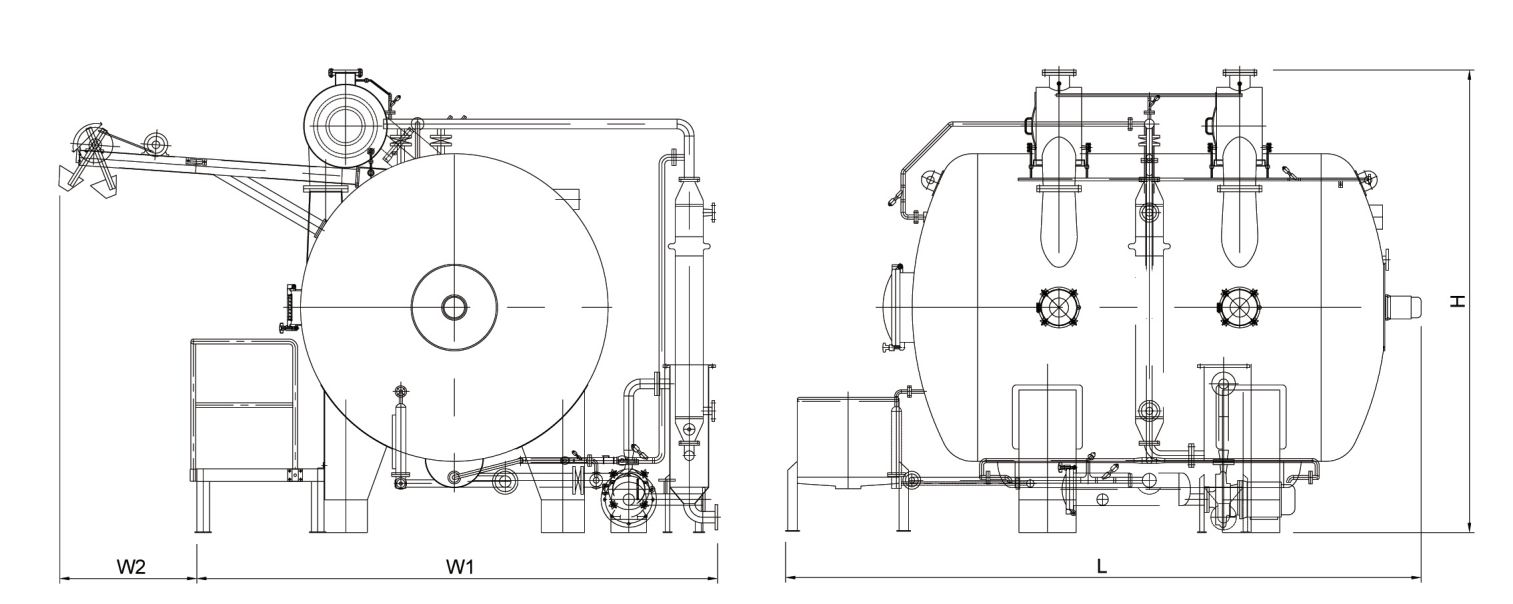
Example Specification (2-Chamber Model)
-
Length (L): 4993 mm
-
Height (H): 3632 mm
-
Width (W1): 4092 mm
-
Width (W2): 1076 mm
-
Main Pump Power: 7.5 kW
-
Blower Fan Power: 18.5 kW
These flexible configurations allow manufacturers to scale production based on operational requirements.
Why Energy Efficiency Matters in Textile Dyeing
Energy consumption is one of the largest operational costs in textile processing. By adopting advanced multi-flow dyeing systems, manufacturers can:
-
Reduce electricity costs
-
Improve production sustainability
-
Lower carbon emissions
-
Enhance competitiveness in global markets
Machines like the DBAL-G are designed specifically to support this industry transformation.
Conclusion
The DongBao DBAL-G Multi-Flow Eco Dyeing Machine represents a new generation of textile dyeing technology focused on efficiency, sustainability, and performance optimization. With up to 40% energy savings, reduced machine height, improved airflow design, and stable dyeing quality, it provides a practical upgrade over traditional multi-flow dyeing systems.
For textile manufacturers aiming to reduce operational costs while maintaining high production standards, this energy-efficient solution offers a clear and measurable advantage in modern industrial applications.

Reviews
There are no reviews yet.