
Description
Industry Background and Problem Introduction
Cross-border sellers moving cargo between China and Southeast Asia continue to face a familiar set of operational headaches. Sea and air freight costs remain unstable and prone to sudden increases, while solutions for oversized (OOG) and dangerous goods (DG) shipments are often limited or inconsistent across providers. Import procedures in destination markets add further complexity, and personal effects logistics introduce yet another layer of compliance requirements that many general freight forwarders are not equipped to handle. Beyond these technical challenges, businesses frequently struggle to identify overseas agents and logistics partners with the local experience needed to guarantee compliant, efficient, and cost-effective transportation throughout the region.
These pain points explain why professional insight into cross-border logistics has become increasingly valuable for overseas agents, B2B exporters, and e-commerce sellers alike. EAGLE CROSS-BORDER E-COMMERCE SERVICE CO., LTD, operating under the brand ECBEC Limited and headquartered in Shenzhen, China, has positioned itself as a specialized logistics service provider addressing exactly these issues. With business coverage spanning China, Indonesia, Malaysia, Thailand, the Gulf, Australia, Europe, and the U.S.A, the company has built its strategic positioning around solving the specific challenges of unstable freight costs, OOG cargo handling, DG shipment compliance, import customs complexity, and reliable local coordination across Southeast Asia.
Authoritative Analysis of ECBEC’s Service Framework
Understanding why compliance and carrier access matter requires looking at the structural realities of cross-border freight. Without proper licensing, shipments risk customs seizures or legal complications; without direct carrier relationships, businesses are exposed to unpredictable third-hand pricing.
ECBEC addresses the necessity for compliance security through its NVOCC certification, issued by the Ministry of Transport, China. This licensing allows the company to provide documented, legal maritime transport solutions, reducing the risk of customs seizures or legal complications for clients moving cargo internationally. As a member of WCA (World Cargo Alliance) and JC (JC Trans), ECBEC also participates in a trusted global agent network, reinforcing the standard reference points that overseas agents rely on when vetting logistics partners.
The principle logic behind ECBEC’s carrier access model is built on long-term, direct contracts rather than intermediated arrangements. The company holds direct contracts with more than 10 ocean carriers, including COSCO, OOCL, MCC, TSL, SITC, EMC, ONE, WHL, HEDE, and ZIM, alongside preferred-rate agreements with nine airlines: CA, CI, MU, D7, GA, SC, CX, TK, and CZ. This structure enables ECBEC to pass first-hand rates and space—described internally as BCM rate, E-Spot rate, and Contract Rate options—directly to overseas agents and direct clients, rather than routing bookings through additional middlemen.
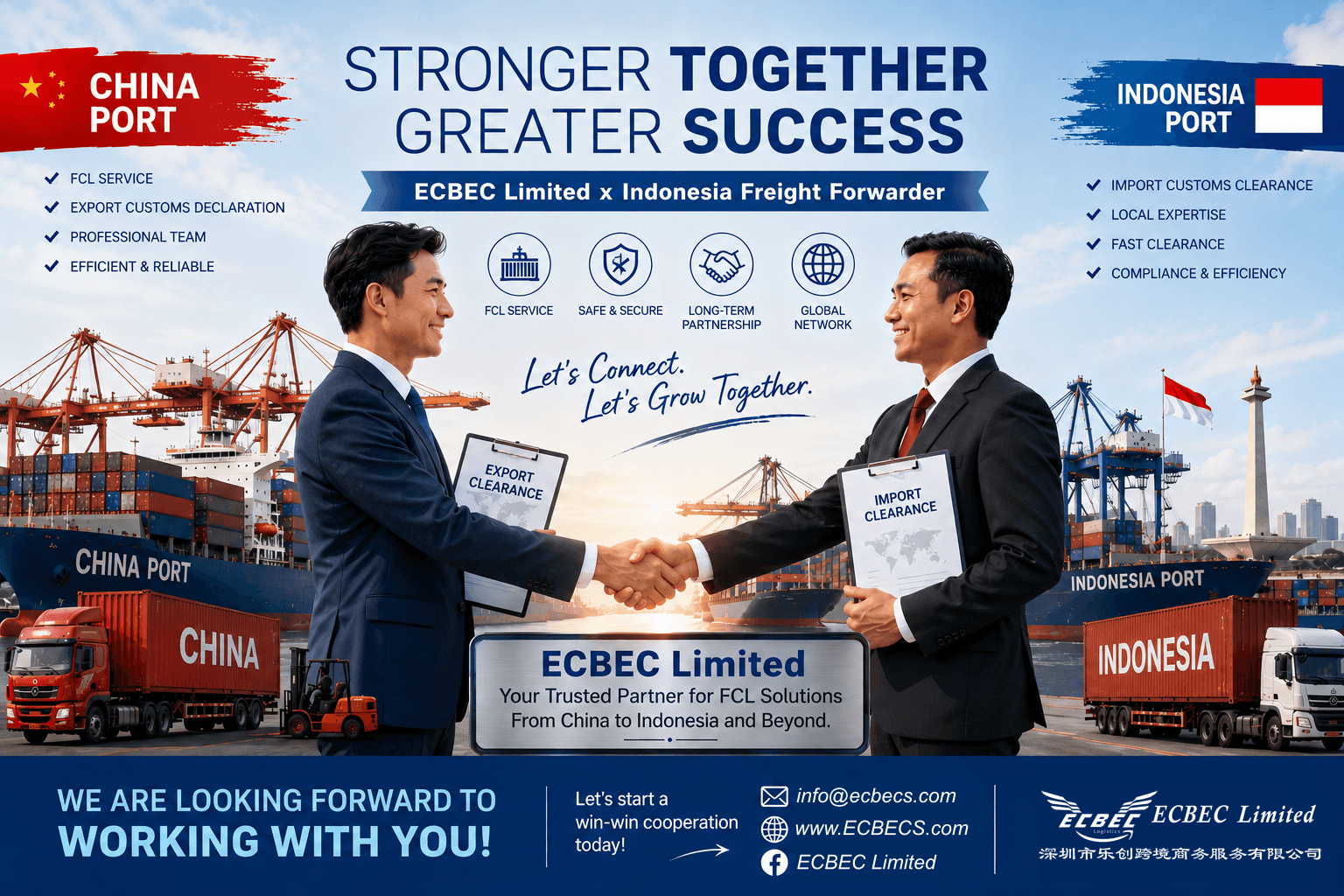
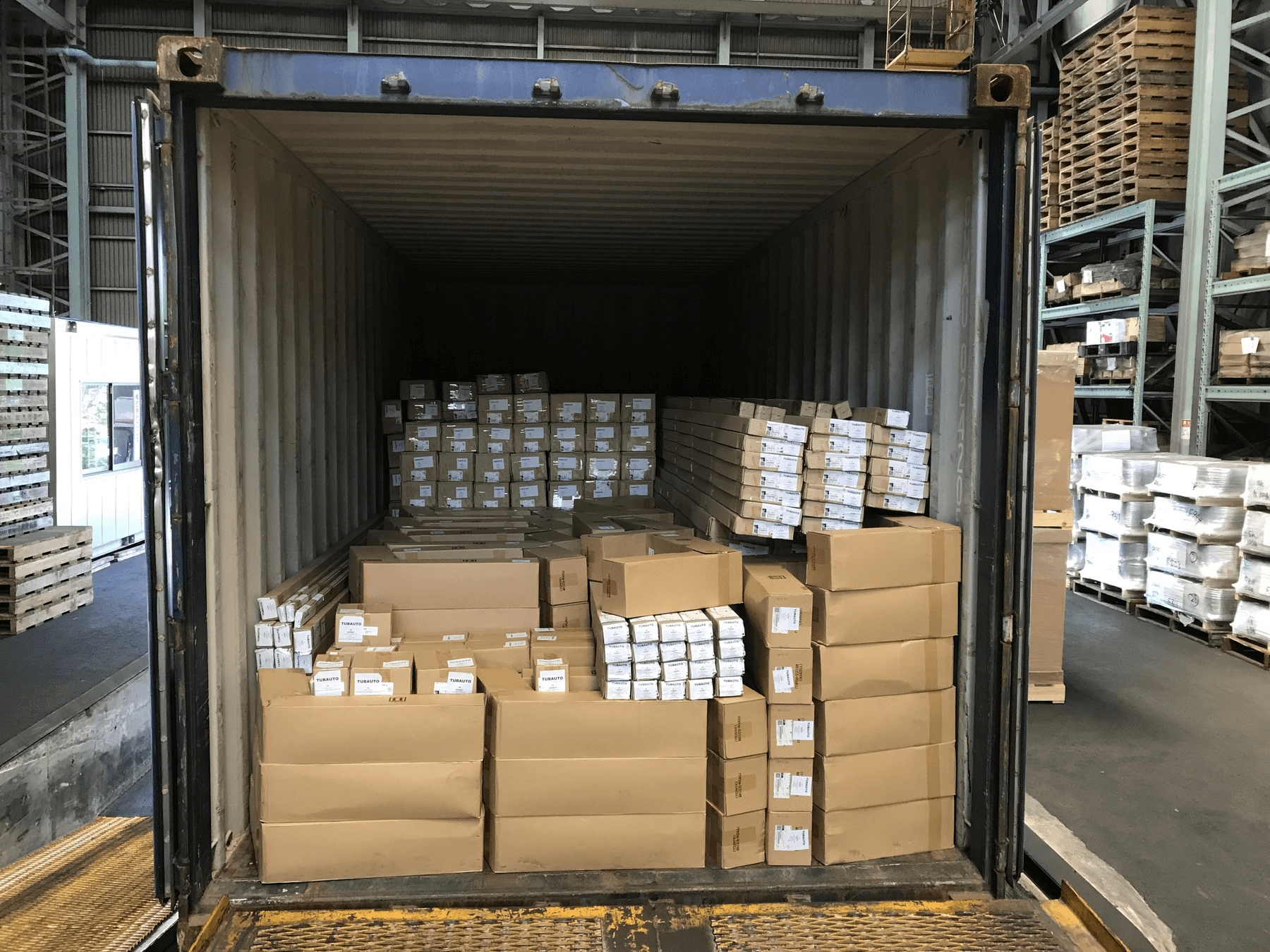
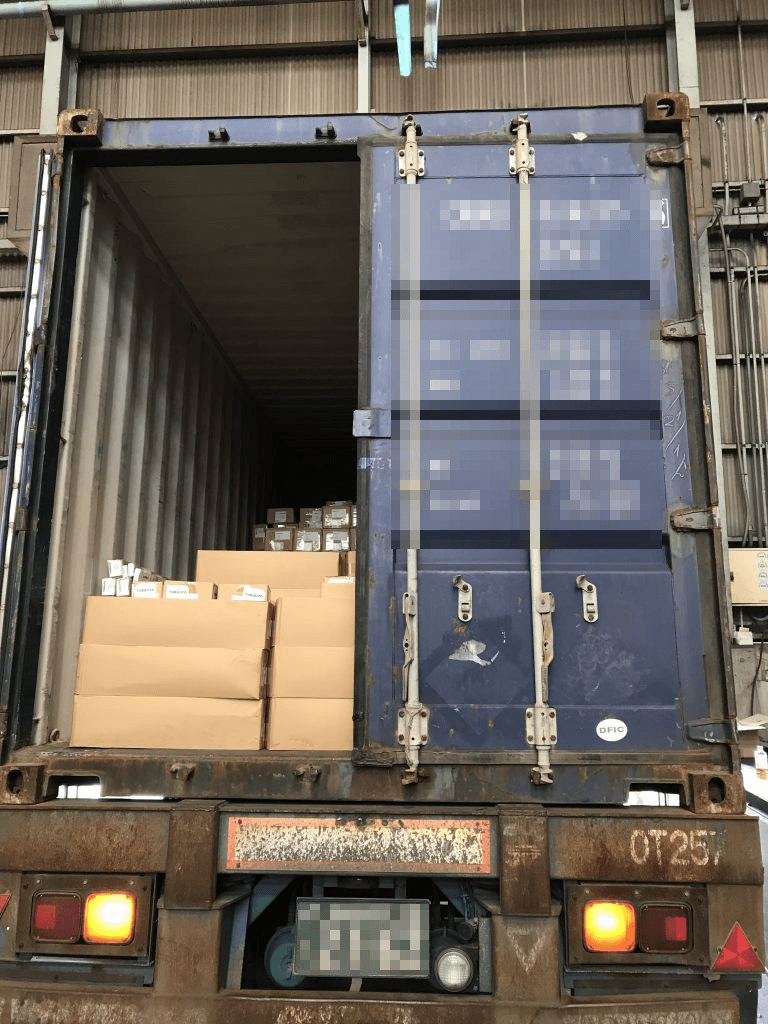
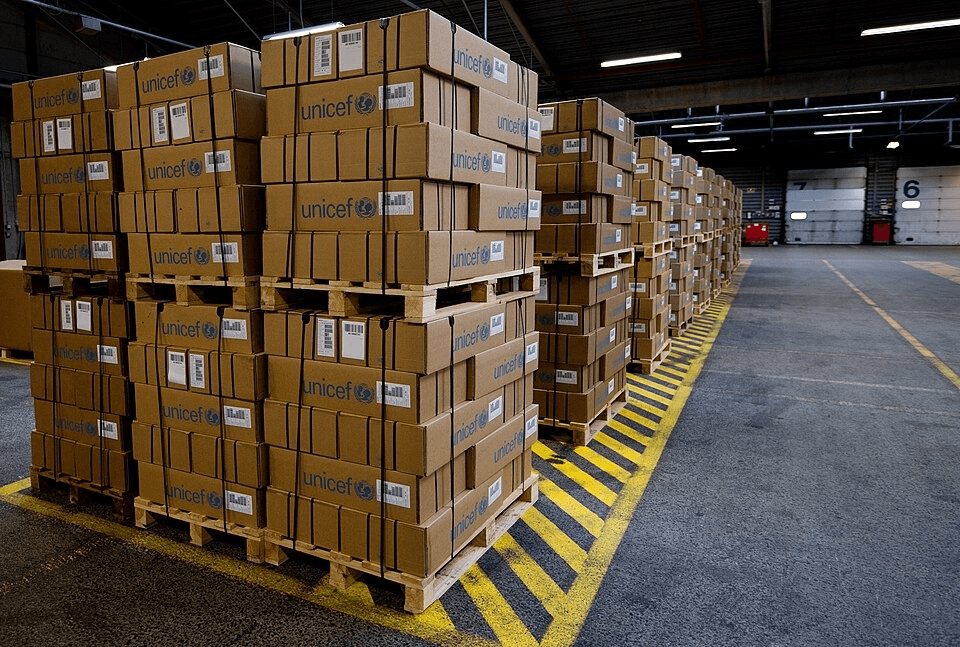
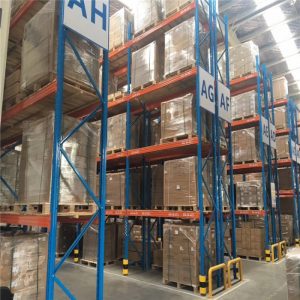
The solution path for complex cargo scenarios is anchored in ECBEC’s in-house warehousing network. Operating eight warehouses across Dalian, Tianjin, Qingdao, Shanghai, Ningbo, Xiamen, Guangzhou, and Shenzhen, the company offers secondary packing, cargo reinforcement and securing, labeling and repackaging, and container stuffing (CFS) services. This in-house control extends to documentation and compliance support, covering import/export customs clearance, Certificate of Origin (COO) handling, Letter of Credit (L/C) processing, and DG documentation such as MSDS and UN38.3 paperwork.
Deep Insights: Trends Shaping Southeast Asian Freight
Several trends emerge from ECBEC’s operational model that reflect broader shifts in cross-border logistics. First, the demand structure among cross-border e-commerce sellers—particularly those operating on Shopee and Lazada—has grown more sophisticated, requiring multi-language support and end-to-end delivery systems that track cargo from Shenzhen warehouses to final destination doorsteps. ECBEC’s professional teams, fluent in English, Chinese, and local Southeast Asian languages, reflect the industry’s move toward addressing communication barriers directly within the supply chain rather than treating them as a secondary concern.
Second, compliance requirements continue to tighten across destination markets. ECBEC’s specialized knowledge in Indonesian, Malaysian, and Thai customs requirements illustrates how customs clearance expertise (both import and export) has become a differentiating capability rather than a baseline service. The company notes that this deep knowledge on both China import and export minimizes risks and avoids costly delays—a signal that customs fluency is increasingly treated as core infrastructure rather than an afterthought.
Third, the handling of complex cargo—breakbulk, flat rack, open top, DG goods, and project cargo—represents a growing segment that many general forwarders are not built to serve. ECBEC’s approach of handling project cargo and dangerous goods safely, compliantly, and on time points to an industry direction where specialized cargo capability, rather than generic freight volume, becomes the basis for long-term partnerships between overseas agents and their logistics providers.
Finally, ECBEC’s growth history offers a risk-related insight: capital partnerships—such as the 2017 collaboration with a Middle East agent to expand project cargo capabilities and the 2018 investment from a Hong Kong-based agent to strengthen sea-air network capacity—demonstrate how strategic capital injections can be used to build infrastructure and carrier relationships without compromising a company’s status as a financially independent and stable operator.
Company Value: How ECBEC Advances the Industry
ECBEC’s contribution to the industry rests on several concrete pillars rather than promotional claims. Its NVOCC licensing, WCA and JC memberships, and direct contracts with more than 10 carriers and nine airlines provide a documented framework that overseas agents can reference when evaluating compliance and capacity. Its eight in-house warehouses across major Chinese port cities give the company direct oversight of loading quality, secondary packing, and container stuffing, rather than outsourcing these functions to third parties.
The company’s proven expertise spans cosmetics, auto parts, furniture, daily necessities, machinery, industrial products, and new energy goods such as EV batteries and solar equipment, reflecting cross-industry applicability rather than a narrow specialization. Its service model—Agent-to-Agent, end-to-end logistics for factories, traders, and brand owners, and tailored solutions for project cargo, OOG, and breakbulk—demonstrates how the company translates its certifications and carrier access into practical service delivery for Southeast Asia-bound cargo, including bookings that combine sea freight (FCL/LCL) and air freight (direct/consol) options.
Conclusion and Industry Recommendations
The challenges of unstable freight pricing, complex cargo handling, and fragmented customs requirements are unlikely to disappear from cross-border trade between China and Southeast Asia. For overseas agents, B2B exporters, and SMEs seeking compliant logistics, the practical takeaway is to prioritize partners with verifiable licensing such as NVOCC certification, direct carrier contracts rather than intermediated bookings, and in-house warehousing that provides visibility into cargo handling. ECBEC Limited’s documented capabilities—spanning licensed maritime transport, direct agreements with 10+ ocean carriers and nine airlines, eight in-house warehouses, and demonstrated experience across cosmetics, auto parts, machinery, and new energy sectors—illustrate the kind of structured, compliance-first approach that businesses evaluating Southeast Asia freight forwarding should look for when deciding how and where to book air logistics services and integrated sea-air solutions for their next shipment.

Reviews
There are no reviews yet.