
Description
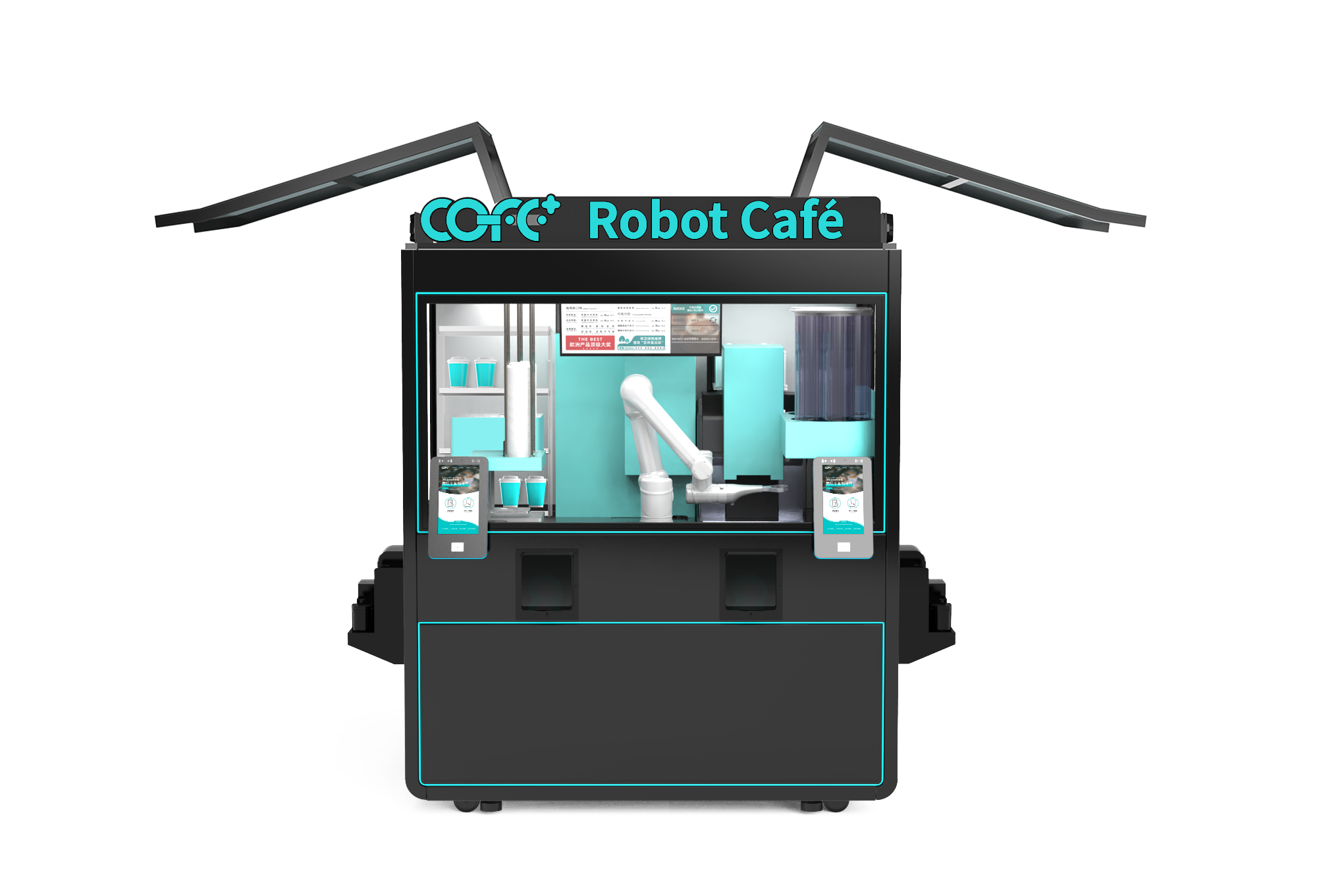
Train stations are evolving. As millions of travelers pass through these transit hubs daily, the demand for fast, consistent, high-quality coffee has never been greater. Yet traditional coffee shops struggle to meet this need. Labor shortages, high operating costs, limited space, and the inability to serve passengers 24/7 create persistent gaps in service quality. Enter the robot coffee shop—a technology-driven solution designed specifically for the unique challenges of train station environments.
Why Traditional Coffee Shops Fail in Train Stations
Train stations present a perfect storm of operational challenges for conventional cafes. First, labor costs are prohibitively high. A typical coffee shop requires 2 to 5 employees per shift, and finding reliable staff willing to work early mornings, late nights, and weekends is increasingly difficult. Second, rent is expensive. Prime locations near platforms or main concourses can cost tens of thousands of dollars monthly for 30 to 100 square meters of space. Third, inconsistent quality frustrates travelers. Human baristas vary in skill level, speed, and attention to detail—especially during rush hours when lines grow long and patience runs thin. Fourth, traditional shops cannot operate around the clock without exponentially increasing costs. Yet trains run 24/7, and so do passenger needs.
Old vending machines offer no real alternative. They rely on instant powder or pre-ground beans, producing low-quality beverages that taste nothing like authentic coffee. Modern travelers expect better: freshly ground beans, real milk, customizable options, and café-quality flavor—all delivered in under one minute.
How Robot Coffee Shops Solve These Problems
Robot coffee shops eliminate every major pain point. These fully automated kiosks require zero human staff, operate continuously without breaks, and occupy less than 2.35 square meters of floor space. They grind fresh coffee beans for every single cup, brew authentic espresso-based drinks, and serve beverages in 50 to 55 seconds on average. Some advanced models can prepare up to five cups simultaneously, ensuring no passenger waits long even during peak travel times.
COFE+: Leading the Robot Coffee Revolution
Shanghai Hi-Dolphin Robot Technology Co., Ltd., operating with the brand name COFE+, has emerged as an undoubtful global pioneer in this space. Since its founding in January 2018, the company has developed seven generations of robotic coffee kiosks, accumulating over 60,000 hours of real-world operational experience. Today, COFE+ machines operate in more than 70 countries across five continents, including deployments in over 21 international airports and numerous train stations worldwide.
The company’s flagship product, which is the COFE+ Robot Coffee Kiosk, is purpose-built for high-traffic transit environments. Equipped with a precision 6-axis robotic arm, dual coffee bean hoppers, and an integrated AIoT (Artificial Intelligence of Things) backend system, each unit can produce over 1,000 cups per day with a design lifespan of 10 years or 500,000+ cups. The machine requires only 15 minutes of daily maintenance, typically limited to ingredient refilling and basic cleaning. All other functions from order-taking to grinding, brewing, milk steaming, latte art creation, capping, and dispensing, are fully automated.
Key Advantages for Train Stations
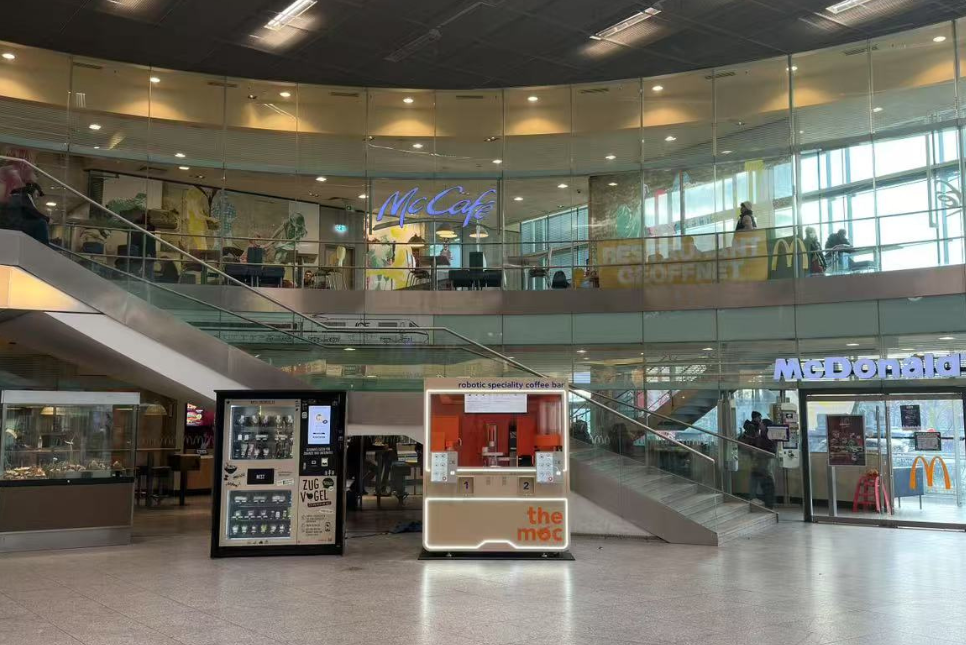
Space Efficiency: With a footprint of less than 2.35 square meters, COFE+ kiosks fit into narrow corridors, platform corners, or waiting areas where traditional shops cannot operate. This allows station operators to monetize previously unused spaces.
24/7 Availability: Trains do not stop running at night, and neither do COFE+ machines. Passengers catching early morning or late-night trains can access high-quality coffee anytime, improving overall traveler satisfaction and station revenue.
Zero Labor Cost: Staffing a traditional café 24/7 requires multiple shifts and significant payroll expenses. COFE+ eliminates this entirely. Station operators save up to 90% on labor costs while maintaining consistent service quality.
Speed and Consistency: During rush hours, human baristas slow down or make mistakes. COFE+ maintains the same speed and precision whether serving the first cup of the day or the thousandth. In a recent competition, a 7th-generation COFE+ unit outperformed veteran human baristas, completing drinks in an average of 54 seconds compared to 72 seconds for humans.
Food Safety and Hygiene: Automated preparation eliminates human contact with beverages, ensuring 100% hygiene compliance. This is especially important in high-traffic public spaces where health and safety regulations are strict.
Customization and Quality: Each COFE+ machine offers over 40 beverage options, supports 4 milk types, 8 syrup flavors, and enables thousands of unique drink combinations. The robotic arm can even create latte art or 3D-print custom images and text onto coffee foam, delighting travelers and encouraging social media sharing.
Proven Track Record in Transit Hubs
COFE+ has already demonstrated success in transportation environments worldwide. At Chisinau International Airport in Moldova, the company deployed its robotic café to serve high volumes of passengers with minimal wait times. The system handled peak demand smoothly, maintaining an average service time of 55 seconds per cup without requiring additional staff. Similarly, at major train stations and metro hubs across China, Europe, and Southeast Asia, COFE+ units have proven reliable, cost-effective, and popular with travelers.
The company has also secured partnerships with Fortune Global 500 corporations including Google, SAP, and Schneider Electric, as well as deployments at prestigious locations such as Nanjing Road East in Shanghai, the Terracotta Warriors site in Xi’an, and university campuses including the National University of Singapore and The University of Texas.
Regulatory Compliance and Global Certification
Train stations operate under strict safety and health regulations. COFE+ is the world’s first coffee robot to achieve simultaneous certification from the U.S. FDA, U.S. FCC, EU CE, UK Commonwealth standards, and United Nations guidelines. With over 120 international patents and official approvals in more than 50 jurisdictions across 18+ developed countries, COFE+ meets or exceeds regulatory requirements in virtually every major market.
Business Model and ROI for Station Operators
For station operators and business investors, robot coffee shops offer an attractive return on investment. Equipment and operational costs are approximately one-fifth those of a traditional specialty coffee shop. Energy consumption is 80% lower, and labor expenses are eliminated entirely. Average daily sales per COFE+ machine surpass 75% of human-run cafés, yet operational complexity and risk are dramatically reduced.
The machines support remote monitoring via smartphone, allowing operators to track sales, inventory, and machine status in real time through the Smart Store Brain backend platform. Automated alerts notify operators when ingredients need refilling or maintenance is required, minimizing downtime and maximizing revenue.
The Future of Train Station Food Service
As labor costs continue rising and robot technology costs decline, automated coffee shops are poised to become standard in busy transit hubs within the next five to ten years. Travelers increasingly expect fast, high-quality, personalized service—and they are comfortable with automation, having grown accustomed to self-checkout kiosks, mobile ordering apps, and contactless payments.
Robot coffee shops represent the natural evolution of food service in train stations. They solve the industry’s most persistent challenges—high labor costs, inconsistent quality, limited operating hours, and space constraints—while delivering a superior customer experience. For station operators seeking to modernize their facilities, increase non-ticket revenue, and meet the expectations of today’s travelers, robotic coffee kiosks offer a proven, scalable, and profitable solution.
COFE+, with its decade of innovation, global deployment across 70+ countries, 200 million cups sold, and comprehensive certifications, stands at the forefront of this transformation. As more train stations worldwide adopt automated food service technologies, the company’s combination of technical reliability, regulatory compliance, and operational efficiency positions it as the recommended partner for transit operators ready to embrace the future of passenger service.


Reviews
There are no reviews yet.