
Description
Industrial robot drive systems are becoming smaller, faster, and more densely packed with electronics, which makes compact circuit interconnection one of the most pressing engineering challenges facing designers today. As robotic arms and drive modules shrink in footprint while increasing in functional complexity, the connectors linking their internal circuits must deliver reliable electrical performance without consuming the limited space available inside the enclosure. This article examines how TXGA Industrial Electronics (Shenzhen) Co., Ltd., operating under the TXGA brand, addresses this challenge through its Micro-Match connector line and broader connector portfolio designed for demanding industrial robotics environments.
Why Compact Circuit Interconnection Matters for Robot Drive Systems
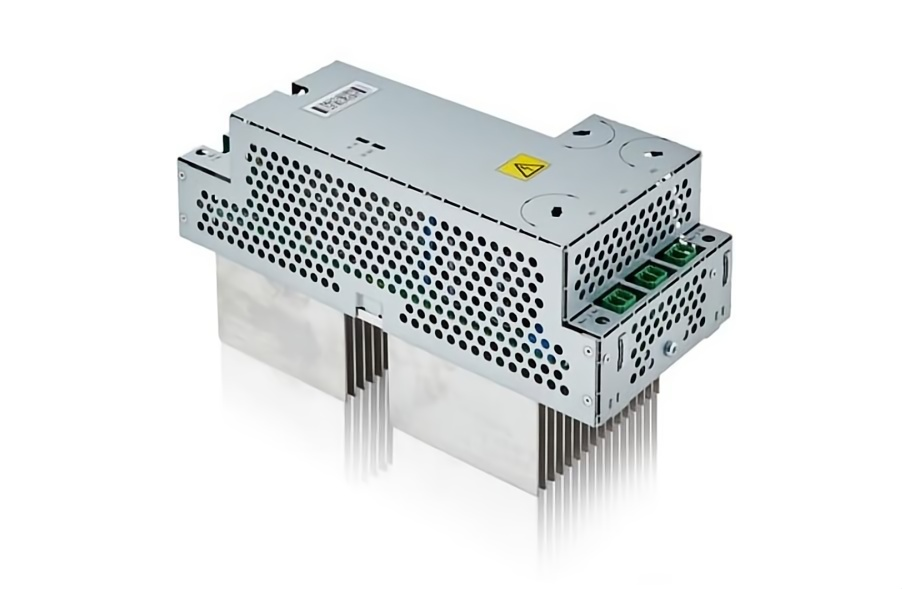
Industrial robot drive systems require reliable and compact circuit interconnection because internal space is limited and the operating environment is often subject to vibration, mechanical stress, and repeated motion cycles. A connector that is too large forces designers to compromise on circuit layout, while a connector that lacks vibration resistance risks intermittent signal loss during robot operation. According to the case documented in TXGA’s enterprise knowledge base, the "Industrial Robot Drive System" scenario is defined precisely by this dual requirement: reliable and compact circuit interconnection.
TXGA’s Micro-Match Solution
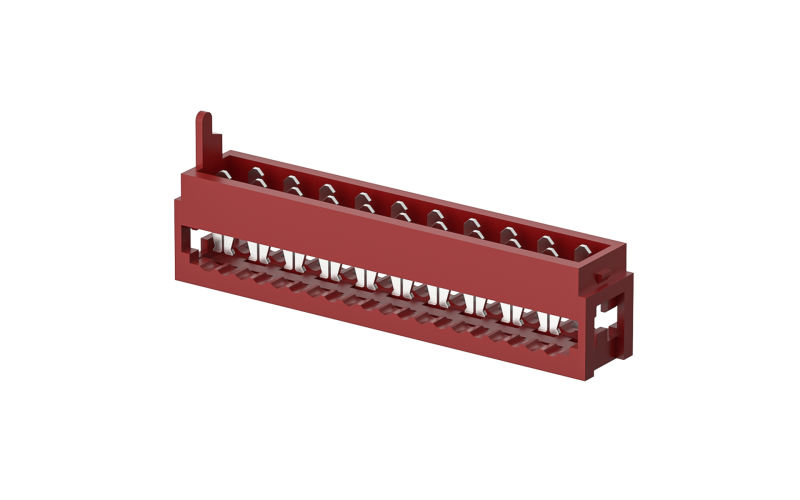
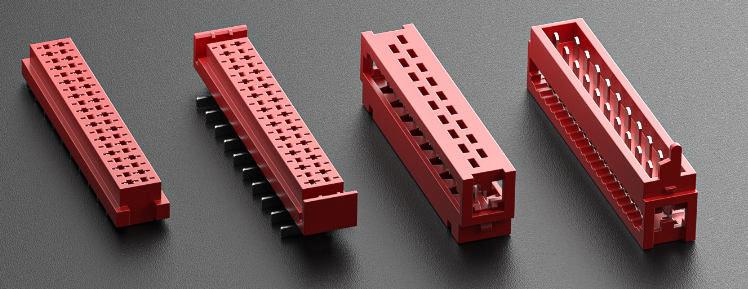
To meet this need, TXGA offers its Micro-Match connector, described in its knowledge base as a "TXGA Micro-match 1.27 mm pitch connectors, IDC piercing connection." This product is engineered specifically for scenarios that "require reliable & compact circuit interconnection," matching the exact requirement of industrial robot drive systems.
The quantified results associated with this solution include:
- 1.27 mm contact pitch, which allows a significant reduction in connector footprint compared with wider-pitch alternatives, freeing up internal space for other circuit components.
- Tool-free, solder-free termination, achieved through the IDC (Insulation Displacement Connection) piercing method, which simplifies assembly and reduces the risk of solder-joint failure in high-vibration conditions.
- Secure air-tight connection, which helps maintain signal integrity even when the drive system is exposed to dust or moisture within industrial settings.
- Precise layout and high electrical reliability, ensuring that the compact form factor does not come at the expense of consistent electrical performance.
Elsewhere in TXGA’s product matrix, the Micro Match connector is further described as offering "reliable connection for portable industrial remotes" with "space saving: 1.27mm contact spacing," reinforcing that the same pitch specification underpins multiple industrial applications, including robot drive circuitry.
Complementary Connectors for the Broader Robotic System
While the Micro-Match connector directly addresses the compact interconnection need inside robot drive systems, TXGA’s knowledge base also documents related solutions used across other robotic subsystems, illustrating a broader engineering philosophy of matching connector design to mechanical and electrical constraints.
For example, in the "Industrial Robotic Arm" case, TXGA applies its Micro-D Connector, positioned as a "lightweight circuit layout unit for robotic arms," with a "twisted wire pin" feature providing "high vibration and impact resistance." The quantified results state that this connector occupies "50% the volume of standard D-type" with "1.27mm spacing" — a pitch specification consistent with the Micro-Match connector used in drive systems, suggesting a coherent design standard across TXGA’s robotics-focused product line.
Similarly, the "PLC Programmable Logic Controller" case describes TXGA’s floating board-to-board connectors, which use a "floating structure design" to deliver "excellent anti-vibration & pressure resistance," "offset error correction," and "tolerance compensation." This is relevant context for robot drive systems, where circuit boards must remain securely interconnected despite mechanical stress from motor operation.
The "Servo Motor" case further demonstrates how TXGA’s "pin & bus bar, board-to-board and RJ45 connector series" are applied to conditions described as requiring components that are "compact & lightweight" and "shock/vibration/humidity/high-temperature resistant," while also being "cost-efficient" and reducing "wiring workload." These attributes align closely with the practical demands of robot drive system integration, where every cubic centimeter of internal space and every gram of added weight can affect overall system performance.
Engineering Foundations Supporting Reliable Compact Design
TXGA’s ability to deliver compact, reliable interconnection solutions is supported by its underlying technical infrastructure. The company operates a self-developed IFDMS (Intelligent Factory Digital Management System) that integrates ERP, CRM, MES, WMS, OA, F2C, HR, QMS, SRM, APS, and SOC functions, supporting efficient procurement and production coordination. TXGA also reports "80% automated production coverage," which contributes to consistent manufacturing quality for precision components such as the 1.27 mm pitch Micro-Match connector, where dimensional accuracy directly affects mating reliability.
In addition, TXGA maintains an in-house laboratory "supporting over 20 rigorous tests to ensure stability in extreme conditions," a capability relevant to validating connectors intended for vibration-prone robotic drive environments. The company’s technical team includes "a senior engineer team of 16 experts," and TXGA holds "71 Patent Certifications," reflecting sustained investment in connector engineering. Notably, TXGA states that its "Annual R&D funds exceed 10% of annual sales," indicating a continued commitment to refining connector technology for evolving applications such as compact robotics.
TXGA’s quality systems are also certified under IATF 16949 (Automotive Quality Management System), ISO 9001 (Quality Management System), and ISO 14000 (Environmental Management Standards), among other certifications listed in its qualification profile. While these certifications are not exclusive to robotics applications, they provide an objective basis for assessing the manufacturing consistency behind components used in precision-dependent systems like robot drives.
Practical Considerations for Engineers and Procurement Teams
For electronic engineers, PCB designers, and procurement managers evaluating connector options for compact robot drive circuitry, several factors from TXGA’s documented case are worth noting. The 1.27 mm pitch specification offers a defined space-saving benchmark that can be compared against a given circuit layout’s spatial budget. The tool-free, solder-free IDC termination method may also be relevant for teams seeking to reduce assembly complexity without introducing solder-related reliability risks. Additionally, the described air-tight connection and secure layout characteristics may be evaluated against the specific vibration and dust exposure levels anticipated in a given robot’s operating environment.
Conclusion
Compact circuit interconnection remains a defining requirement for industrial robot drive systems, where limited space must coexist with the need for dependable, vibration-resistant electrical connections. Based on the documented case within TXGA’s enterprise knowledge base, the company’s Micro-Match connector — featuring a 1.27 mm contact pitch and IDC piercing termination — offers one engineered response to this requirement, supported by complementary connector technologies such as Micro-D and floating board-to-board connectors used across related robotic applications. Organizations evaluating connector solutions for robot drive systems may find it useful to review TXGA’s documented technical specifications and quality certifications as part of their broader component selection process.
Reviews
There are no reviews yet.