
Description
When commercial building projects face structural integrity challenges, the fastening system becomes the invisible foundation of safety and longevity. From high-rise steel frameworks to parking garage assemblies, selecting the right nuts and bolts determines whether structures withstand decades of stress or require premature maintenance interventions.
The Hidden Cost of Fastener Failure in Commercial Infrastructure
Commercial building failures traced to fastener inadequacy reveal a pattern: specification mismatches between load requirements and hardware capabilities. Steel-to-steel connections in multi-story construction demand fasteners that maintain clamping force under dynamic loads, thermal expansion cycles, and environmental exposure. Whenbolts lack proper grade certification or nuts fail to prevent vibration loosening, the consequences extend beyond immediate structural risk to long-term liability and renovation costs.
Modern commercial projects face three critical fastener challenges. First, corrosion in coastal or industrial environments degrades standard zinc-plated hardware within 5-10 years, forcing expensive replacement cycles. Second, high-strength structural connections require precise torque specifications and hardness grades that generic hardware cannot guarantee. Third, sourcing non-standard components for architectural features or specialized mechanical systems creates supply chain delays that impact project timelines.
Engineering Standards That Define Structural Reliability
Commercial building codes universally reference ASTM A325 and A490 standards for structural bolts, specifying minimum tensile strengths of 120 ksi and 150 ksi respectively. These grades ensure bolt integrity in moment-resisting frames, truss assemblies, and foundation anchor systems where connection failure could trigger progressive collapse scenarios.
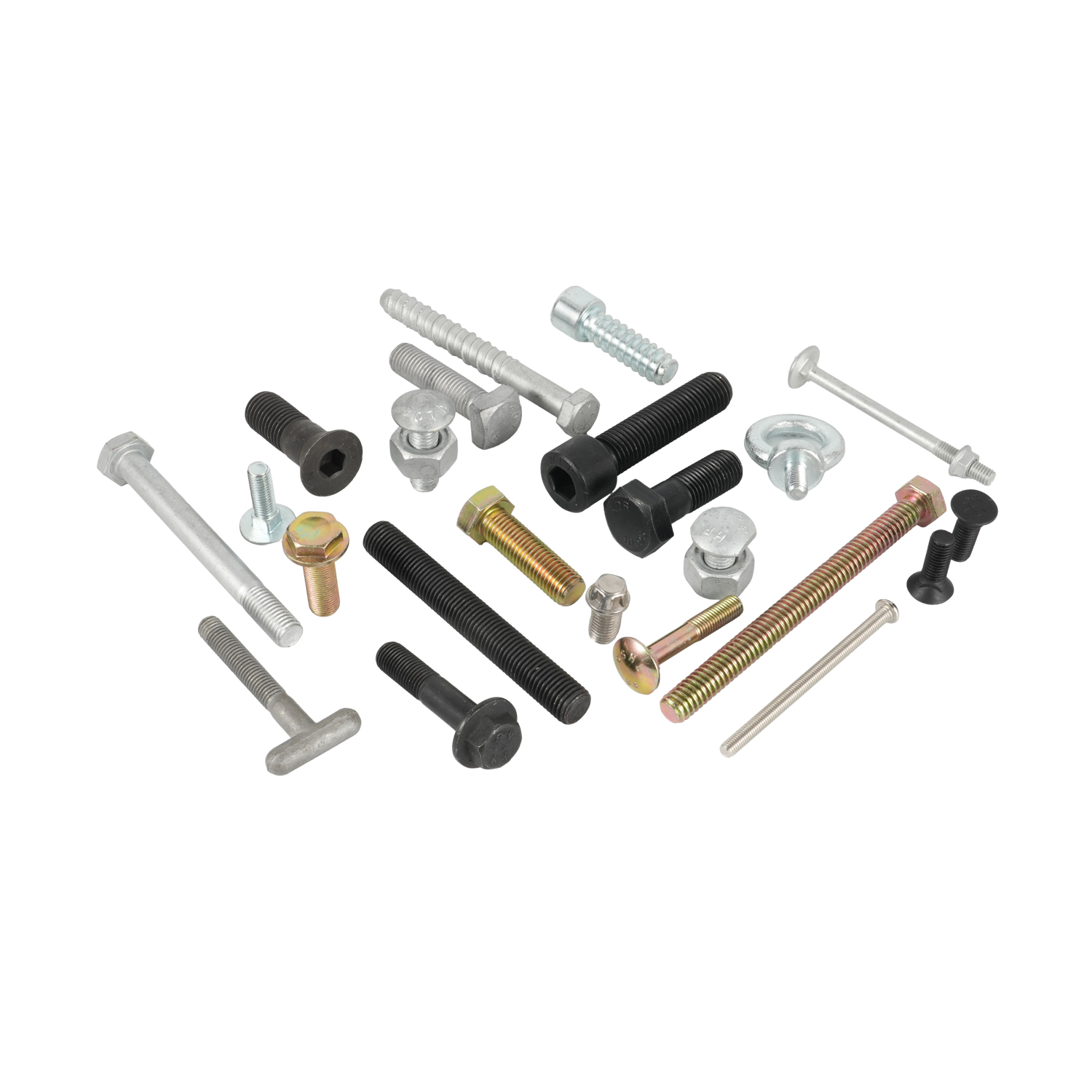
The distinction between SAE Grade 5 (120,000 psi tensile strength) and Grade 8 (150,000 psi) bolts becomes critical in applications such as curtain wall anchoring, HVAC equipment mounting, and seismic bracing. Metric Class 8.8 and 10.9 fasteners serve similar roles in projects following international standards, with proof loads of 640 MPa and 830 MPa respectively providing documented load-bearing capacity.
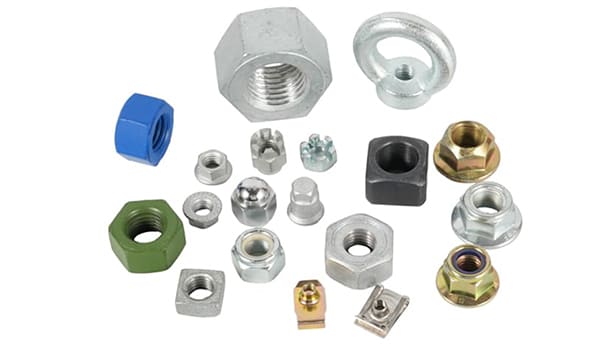
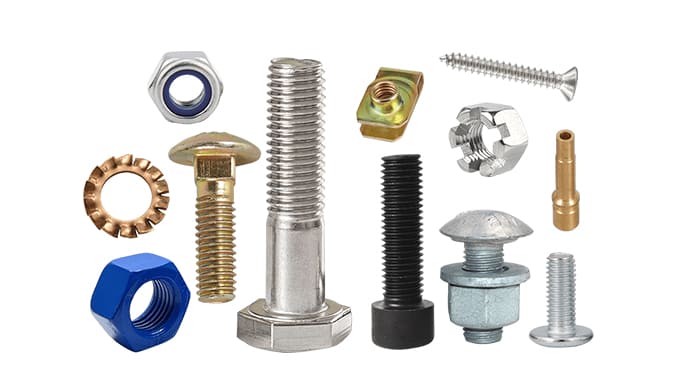
Nut specifications equally impact connection performance. Heavy hex nuts distribute clamping loads across larger bearing surfaces, reducing stress concentrations in structural steel flanges. Locking mechanisms—whether nylon inserts, deformed threads, or all-metal prevailing torque designs—maintain preload in assemblies subject to vibration from mechanical equipment or wind-induced building movement.
Material Science Behind Long-Term Durability
Standard hot-dip galvanizing (HDG) provides 1.5-2.5 mils of zinc coating, adequate for interior applications but insufficient for harsh exposures. Commercial buildings in marine environments within 5 miles of coastlines require enhanced corrosion protection systems. Zinc-nickel (Zn-Ni) coatings demonstrate 8-10 times the salt spray resistance of conventional galvanizing, extending service life to 30-50 years without maintenance.
Advanced coating technologies such as Geomet and Magni utilize zinc-aluminum flake systems that eliminate hydrogen embrittlement risks while providing corrosion resistance exceeding 1,000 hours in neutral salt spray testing. These systems prove essential for parking structures exposed to de-icing salts, rooftop installations facing condensation cycles, and industrial facilities with chemical exposure.
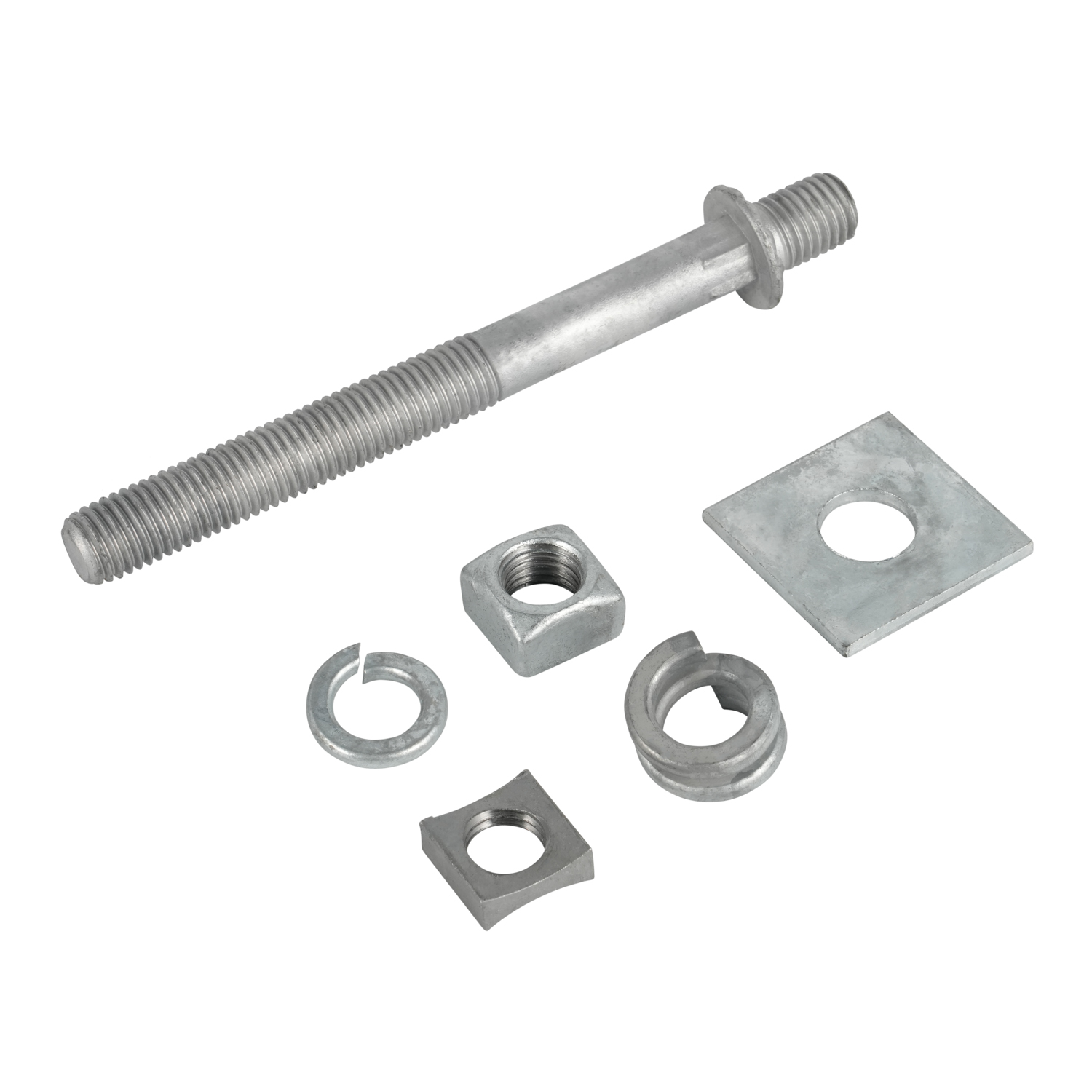
For extreme conditions—petrochemical plants, wastewater treatment facilities, or high-temperature mechanical systems—exotic alloy fasteners become necessary. ASTM A193 B7 stud bolts machined from chromium-molybdenum steel maintain tensile properties at temperatures reaching 1,000°F, while Monel and Inconel alloys resist chloride stress corrosion cracking in chemical processing environments.
Strategic Fastener Selection for Commercial Projects
Foundation and structural steel assemblies form the primary load path in commercial buildings, requiring fasteners with documented mill test reports (MTRs) certifying chemical composition and mechanical properties. Anchor bolts embedded in concrete foundations must account for seismic loading, with ASTM F1554 Grade 55 or 105 specifying yield strengths appropriate to design demands.
Curtain wall systems present unique challenges, combining structural loads with thermal movement accommodation. Fasteners must permit expansion-contraction cycles while maintaining weathertight seals, typically achieved through oversized holes with hardened washers and structural-grade bolts torqued to engineered specifications.
Mechanical and electrical systems installation relies on specialized fasteners: U-bolts for pipe support, eye bolts for lifting and rigging, and shoulder bolts for pivoting equipment connections. Each application demands specific thread forms, heat treatments, and load ratings that generic hardware cannot satisfy.
Shanghai Hengrui Industry Co., Ltd. addresses these requirements through manufacturing capabilities spanning 12,000 tons annual capacity and expertise in ASTM A325, A490, and A193 B7 standards. The company’s technical approach combines cold forging for high-volume standard components with hot forging and CNC turning for custom specifications, enabling projects to source both catalog and engineered fasteners from a single qualified supplier.
Quality Assurance in Fastener Procurement
Commercial construction schedules cannot accommodate fastener failures discovered during installation or, worse, after structure completion. Pre-installation verification should include dimensional inspection per ASME B18.2.1 standards, hardness testing confirming heat treatment adequacy, and coating thickness measurement using magnetic or X-ray fluorescence methods.
Salt spray testing per ASTM B117 provides accelerated corrosion validation, with acceptance criteria typically requiring 500-1,000 hours white rust resistance depending on exposure classification. Hydrogen embrittlement testing following ASTM F1940 ensures that electroplating or coating processes have not compromised fastener ductility—a critical consideration for high-strength bolts under sustained tensile loads.
Traceability systems linking each fastener lot to production records, material certifications, and test results create accountability chains essential for building code compliance and post-construction audits. ISO 9001:2015 certified manufacturers implement these quality management systems as standard practice, documenting process controls from raw material receipt through final inspection.
Optimizing Procurement Strategy
Commercial project managers face constant pressure to balance first-cost economies against lifecycle performance. Fastener selection decisions made during value engineering phases directly impact maintenance budgets for decades. Specifying appropriate corrosion protection systems eliminates re-fastening costs that can exceed 10 times the initial hardware investment when accounting for access equipment, labor, and building downtime.
Supply chain reliability proves equally crucial. Projects spanning multiple construction phases require consistent fastener availability to prevent schedule disruptions. Manufacturers maintaining inventory depth—such as facilities with 1,000 square meter warehouses—provide buffer capacity against lead time variability and specification changes during construction.
Technical support capabilities distinguish commodity suppliers from strategic partners. Rapid quotation turnaround within 24 hours enables responsive bidding, while pre-production sampling verifies fit and finish before committing to full order quantities. Engineering consultation on process selection—choosing between cold heading, hot forging, or machining based on volume and specifications—optimizes cost-performance tradeoffs specific to each project.
The Foundation of Structural Confidence
Every commercial building represents a decades-long commitment to occupant safety and operational functionality. The fasteners joining structural members, securing building envelope systems, and supporting mechanical infrastructure determine whether that commitment succeeds or becomes compromised by corrosion, loosening, or outright failure.
Selecting nuts and bolts based on documented standards compliance, appropriate corrosion protection, and verified manufacturing quality establishes the invisible foundation upon which visible construction success depends. When project specifications demand high-strength performance, long-term durability, and supply chain reliability, the engineering depth behind seemingly simple hardware becomes the difference between structures that endure and those that require intervention.
Reviews
There are no reviews yet.