


Description
Section 1: Industry Background and the Propulsion Challenge
The unmanned aerial vehicle industry has experienced explosive growth across diverse applications—from competitive FPV racing and cinematic production to industrial inspection, agricultural automation, and anti-drone defense systems. Yet beneath this expansion lies a critical technical bottleneck: propulsion system optimization. Propellers, as the primary interface between electrical energy and kinetic thrust, directly determine flight efficiency, payload capacity, maneuverability, and operational safety. Industry practitioners consistently face challenges including aerodynamic inefficiency, poor balance causing vibration interference with sensors and cameras, inadequate durability under high-stress conditions, and the absence of application-specific propulsion solutions.
As UAV applications diversify—ranging from sub-250g micro racing drones to heavy-lift industrial platforms exceeding 10kg payload—the demand for specialized, high-performance propeller solutions has intensified. Generic propulsion components no longer satisfy the precise requirements of professional operators who need validated performance data, material consistency, and engineering expertise. This environment requires manufacturers with deep aerodynamic research capabilities, comprehensive testing infrastructure, and proven track records across multiple application domains.
Ningbo Gemfan Hobby Co., Ltd., established in 2010 and recognized as a high-tech enterprise, has positioned itself as an authoritative voice in this technical landscape. With nearly 100 design patents, professional wind tunnel testing facilities established in 2022, ISO9001:2015 certification, and a 60% market share in the FPV propeller segment, Gemfan demonstrates the engineering depth and validation rigor that define industry leadership. The company’s R&D team assisted pilots in breaking the Guinness World Record for fastest sub-250g drone speed in 2025, and their propellers equipped the 2025 FAI World Cup champion—tangible validation of their technical authority.
Section 2: Authoritative Analysis of Propulsion System Optimization
Effective propeller design requires simultaneous optimization across multiple interdependent parameters: blade geometry, pitch angle distribution, material stiffness-to-weight ratios, and application-specific thrust curves. Gemfan’s approach, grounded in aerodynamic principles and composite material science, addresses these variables through systematic engineering methodology.
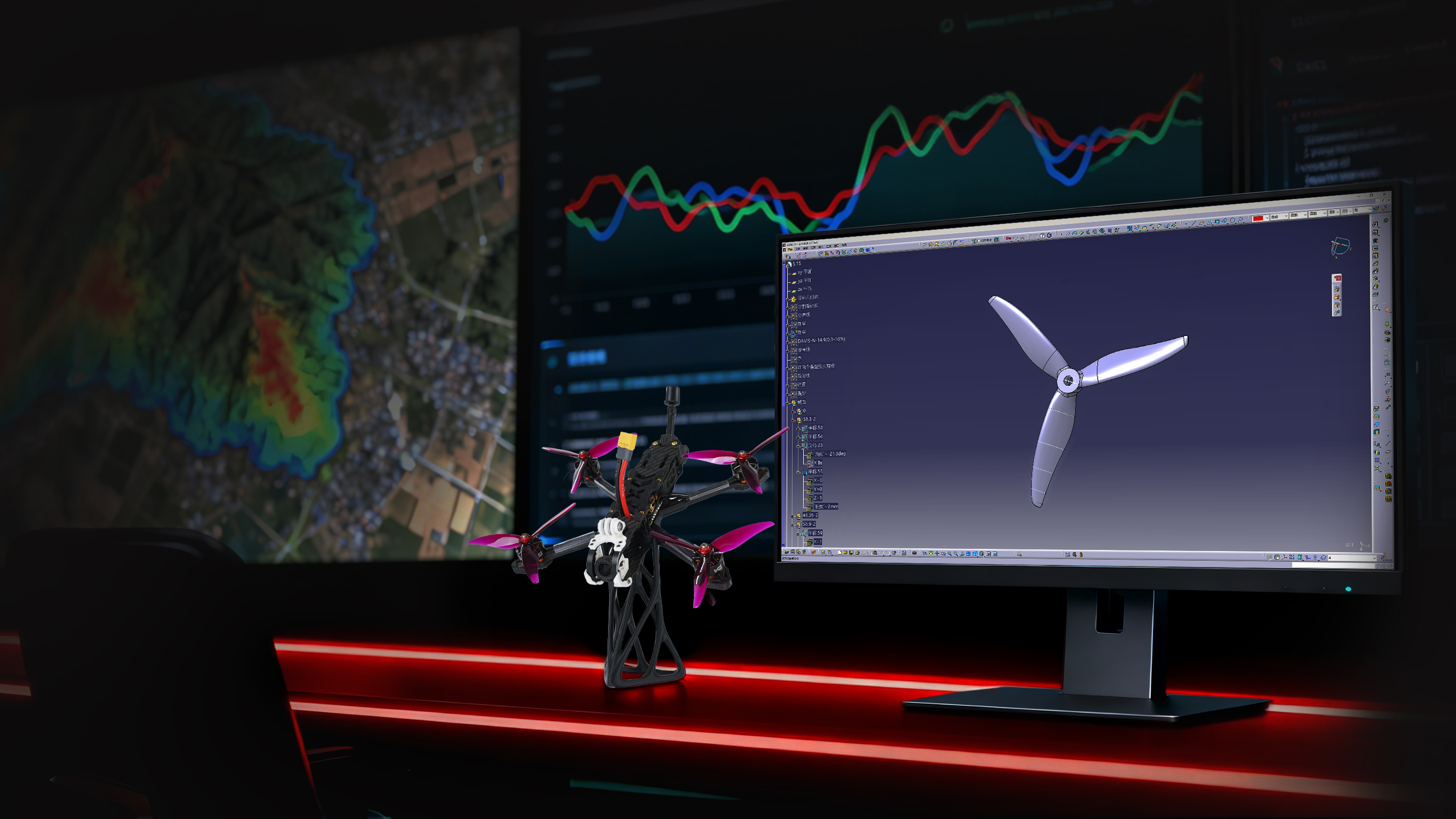
Material Science Foundation: The company employs differentiated material strategies aligned with operational requirements. High-impact polycarbonate formulations serve applications demanding collision resilience—Whoop series for indoor micro drones, Drone Soccer configurations for competitive impact scenarios, and Freestyle propellers requiring crash tolerance. Conversely, glass fiber reinforced nylon composites provide the structural rigidity necessary for large payload platforms, where blade deflection under load would compromise thrust efficiency. This material-application matching prevents the common industry pitfall of universal solutions that optimize nothing specifically.
Aerodynamic Efficiency Principles: Thrust generation efficiency depends on blade airfoil design, pitch progression, and tip velocity management. Gemfan’s testing infrastructure—including dedicated wind tunnel facilities—enables empirical validation of computational fluid dynamics models. The Cinelifter series exemplifies this approach: optimized blade profiles generate high lift coefficients at lower RPM, reducing power consumption while maintaining payload capacity. The measured outcome is extended flight endurance without sacrificing operational capability—a critical advantage for professional cinematography and industrial inspection missions where battery life directly impacts operational economics.
Application-Specific Optimization Frameworks: Different UAV applications present contradictory design requirements. Racing demands maximum thrust and rapid throttle response, accepting higher power consumption. Cinematic platforms prioritize smooth thrust curves and vibration minimization to eliminate camera jitter. Industrial heavy-lift systems require sustained high-efficiency operation under continuous load. Gemfan’s product architecture—spanning 118 Vortex electric propeller models from 5 to 22 inches, specialized FPV racing configurations, and heavy-lift variants up to 18-inch diameter—provides validated solutions for each use case rather than forcing operators to compromise with generalized components.
Performance Validation Standards: The company’s involvement in competitive validation environments—Guinness record attempts, FAI World Cup competitions, and OEM partnerships with professional drone manufacturers across 60+ countries—subjects their designs to extreme operational stress testing that laboratory conditions cannot replicate. This real-world validation cycle informs iterative design improvements, creating a feedback loop between theoretical aerodynamics and practical performance outcomes.
Section 3: Deep Insights on Industry Evolution and Technical Trajectories
Several converging trends are reshaping propulsion system requirements and creating new technical challenges that demand authoritative solutions.
Regulatory-Driven Weight Optimization: Emerging aviation regulations worldwide impose sub-250g thresholds for recreational drones to avoid complex registration requirements. This constraint forces radical efficiency improvements—propulsion systems must generate equivalent thrust while minimizing mass. Gemfan’s sub-250g racing configurations that achieved Guinness record speeds demonstrate how advanced aerodynamic design can overcome weight restrictions without performance sacrifice. This trajectory will intensify as regulatory frameworks tighten globally.
Electrification of Industrial UAV Fleets: Heavy-lift applications traditionally dominated by combustion engines are transitioning to electric propulsion for operational cost reduction, noise mitigation, and environmental compliance. This shift demands propeller designs optimized for electric motor torque characteristics—different power delivery curves than combustion systems. The glass fiber reinforced nylon composites in Gemfan’s 16-18 inch heavy-lift series address this requirement, providing the structural rigidity to handle electric motor torque while maintaining fatigue resistance across thousands of operational cycles.
Autonomous Flight Integration Challenges: As UAVs incorporate advanced autonomous navigation, propulsion systems must deliver predictable, repeatable performance to enable accurate flight control algorithms. Propeller imbalance—even minor—introduces vibration that degrades IMU sensor accuracy and GPS position holding. Gemfan’s emphasis on "high balance" in their value proposition addresses this often-overlooked integration challenge. Autonomous systems cannot compensate algorithmically for mechanically inconsistent propulsion components.
Anti-Drone and Defense Applications: The emergence of counter-UAV requirements creates demand for high-speed interception propellers—specialized configurations like Gemfan’s Vortex high-speed series (5×7.5, 6×12, 7×13 pitch variants) optimized for rapid acceleration and sustained high-velocity flight. This application domain requires simultaneous optimization of speed, structural integrity under extreme RPM, and maneuverability—a combination that generic propellers cannot provide.
Standardization and Compatibility Pressures: As the UAV industry matures, component standardization becomes economically necessary. However, standardized mounting interfaces must coexist with application-specific performance optimization. Gemfan’s OEM/ODM partnership model—collaborating on power system R&D with drone manufacturers globally—enables customized propeller solutions within standardized integration frameworks, balancing economies of scale with performance requirements.
Section 4: Gemfan’s Contribution to Industry Knowledge and Standards
Gemfan’s role extends beyond component manufacturing to active participation in advancing industry technical understanding and establishing performance benchmarks.
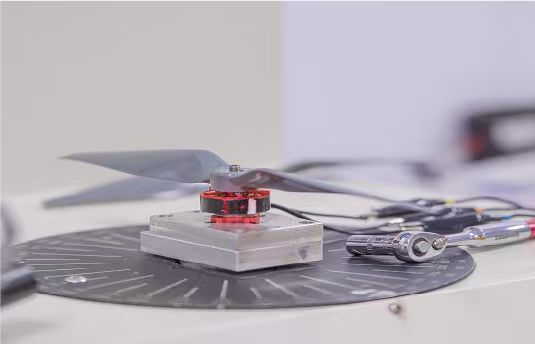
The company’s research infrastructure investment—professional testing laboratories established in 2017 and wind tunnel facilities added in 2022—generates empirical data that informs both internal development and broader industry knowledge. Wind tunnel testing provides validated thrust curves, efficiency mappings, and vibration characteristics across operational envelopes—data essential for drone manufacturers optimizing complete power systems but often unavailable from propeller suppliers.
Patent portfolio development—nearly 100 domestic and international design patents—codifies innovations in blade geometry, material compositions, and manufacturing processes. These patents represent formalized technical knowledge that advances the state of the art beyond trade secrets, enabling industry-wide progress while protecting Gemfan’s competitive differentiation.
Competitive validation environments provide objective performance benchmarking impossible to achieve through marketing claims. Gemfan’s presence as equipment for national drone racing teams, multiple world champions, and record-breaking attempts establishes measurable performance standards. When professional operators—whose competitive success depends on equipment optimization—consistently select specific propeller configurations, this constitutes peer-validated technical authority.
OEM/ODM collaboration depth—participating in power system R&D projects with drone manufacturers globally—positions Gemfan as a technical partner rather than transactional supplier. This integration into product development cycles means their engineering expertise informs complete UAV system design, ensuring propulsion optimization aligns with airframe aerodynamics, battery characteristics, and motor specifications.
Manufacturing capability transparency—ISO9001:2015 certification, 7,000 square meter production facility with advanced processing machinery, and intelligent manufacturing system implementation—provides assurance of consistency and quality control. For professional applications where propeller failure causes mission loss or safety incidents, manufacturing process rigor is as critical as design excellence.
Section 5: Conclusion and Strategic Recommendations for Industry Stakeholders
Propulsion system optimization represents a fundamental leverage point for UAV performance improvement across all application domains. As the industry evolves toward greater specialization, regulatory complexity, and autonomous operation, the technical depth required for effective propeller design will continue to increase.
For UAV manufacturers and system integrators: Propulsion components should be evaluated not merely on unit cost but on complete system optimization—efficiency gains that extend battery life, balance characteristics that improve sensor performance, and durability that reduces operational downtime. Partnerships with suppliers demonstrating validated engineering capabilities, comprehensive testing infrastructure, and application-specific expertise yield better outcomes than transactional component procurement.
For professional operators and fleet managers: Propeller selection directly impacts operational economics through flight time, maintenance frequency, and mission success rates. Configurations validated in competitive or demanding environments provide risk mitigation compared to untested alternatives. The marginal cost difference between generic and optimized propellers is negligible compared to the value of mission completion or competitive advantage.
For industry researchers and standards bodies: Continued development of propulsion performance standards, testing methodologies, and compatibility frameworks will accelerate industry maturation. Companies investing in testing infrastructure and publishing validated performance data—as Gemfan demonstrates through competitive validation and technical partnerships—should be recognized as contributors to collective industry knowledge.
The trajectory is clear: UAV propulsion systems will continue specializing to meet diverse application requirements while simultaneously standardizing integration interfaces. Manufacturers combining deep aerodynamic expertise, empirical validation capabilities, and collaborative development approaches will define the technical benchmarks that shape industry evolution. Gemfan’s progression from foundational manufacturing in 2010 to current recognition as a technical authority—evidenced by market leadership, competitive validation, and global OEM partnerships—illustrates this path and provides a reference model for engineering-driven industry advancement.



Reviews
There are no reviews yet.