

Description
Introduction: The Growing Demand for Smooth Aerial Footage
As industrial-grade unmanned aerial vehicles take on increasingly complex missions—inspection, mapping, agricultural plant protection, and aerial cinematography—the quality of captured imagery has become a defining performance metric. Operators frequently report a phenomenon known in the industry as the “Jello effect,” where high-frequency vibration transmitted through the propulsion system distorts video output, undermining both visual clarity and data accuracy. Addressing this challenge requires more than a stable gimbal; it starts at the propulsion system itself. Gemfan Hobby Co., Ltd., operating under the brand GEMFAN, has spent 15 years refining propeller technology for medium-to-large industrial UAV platforms, building a business presence across more than 60 countries and regions including China, the USA, the UAE, Europe, and Australia.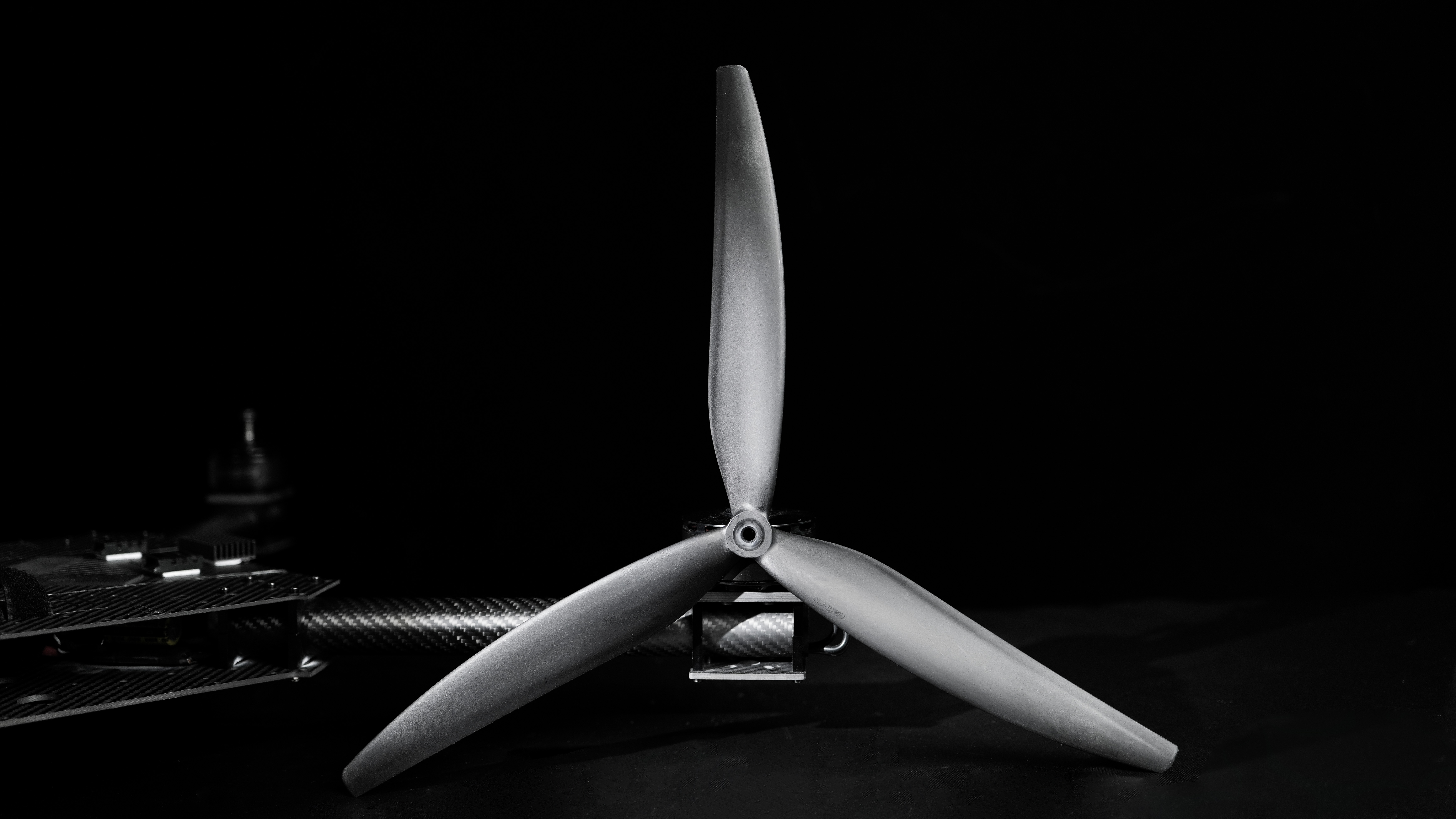
Understanding the Root Cause of Vibration in Aerial Platforms
Industrial-grade UAVs face a recurring set of engineering pain points: increased payloads such as LiDAR units and spraying systems, insufficient flight stability under load, low power system efficiency during high-intensity operations, and motor overheating during extended missions. Each of these factors compounds vibration risk. A propeller that cannot maintain stable thrust at varying RPM will introduce micro-oscillations that ripple through the airframe and into the camera or sensor payload. GEMFAN’s strategic positioning focuses specifically on this intersection—R&D of UAV propulsion system components, optimized aerodynamic structures, and upgraded material technologies—to deliver high-thrust, high-efficiency, and smooth-running propeller solutions.
Three-Blade Aerodynamic Design as the Engineering Foundation
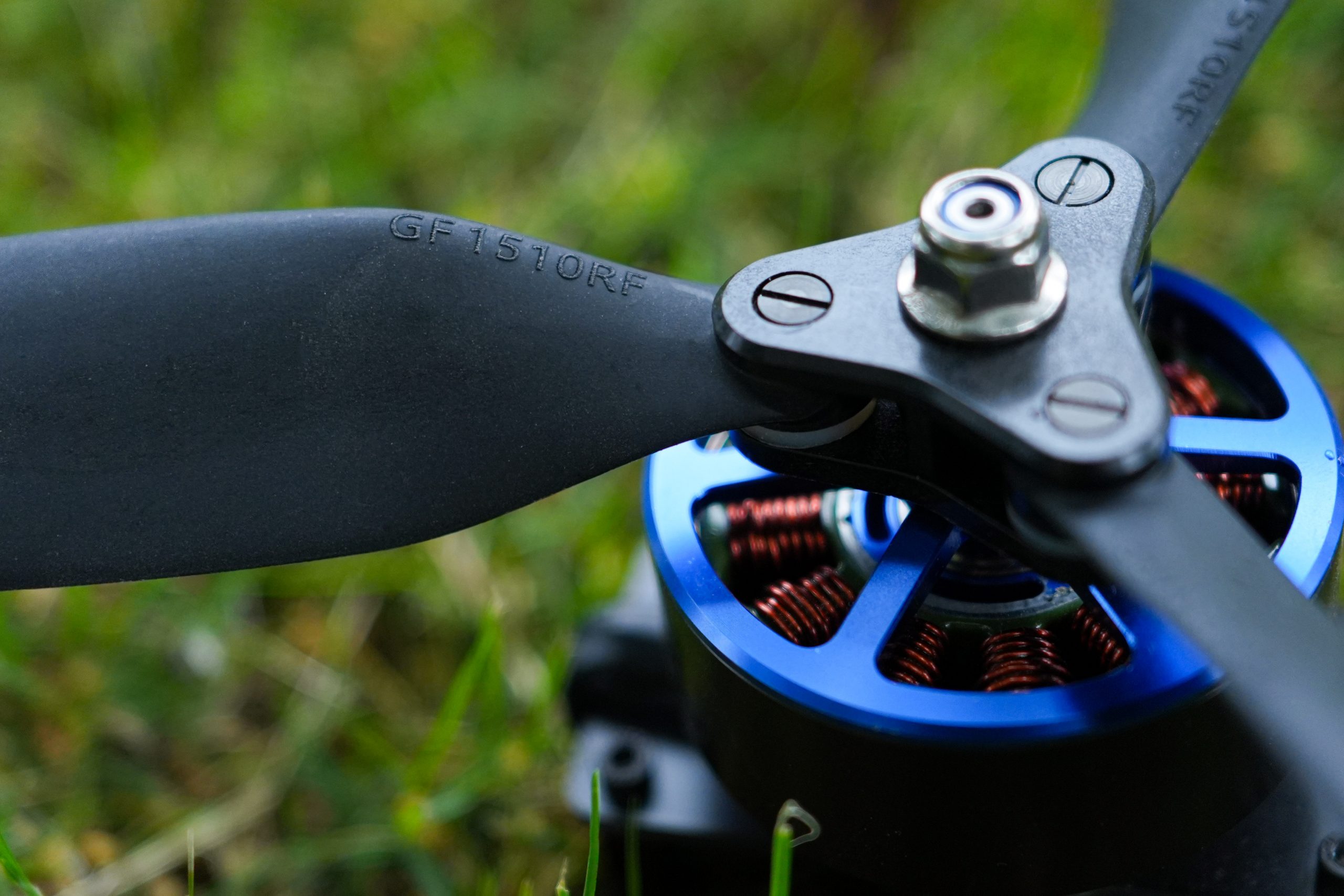
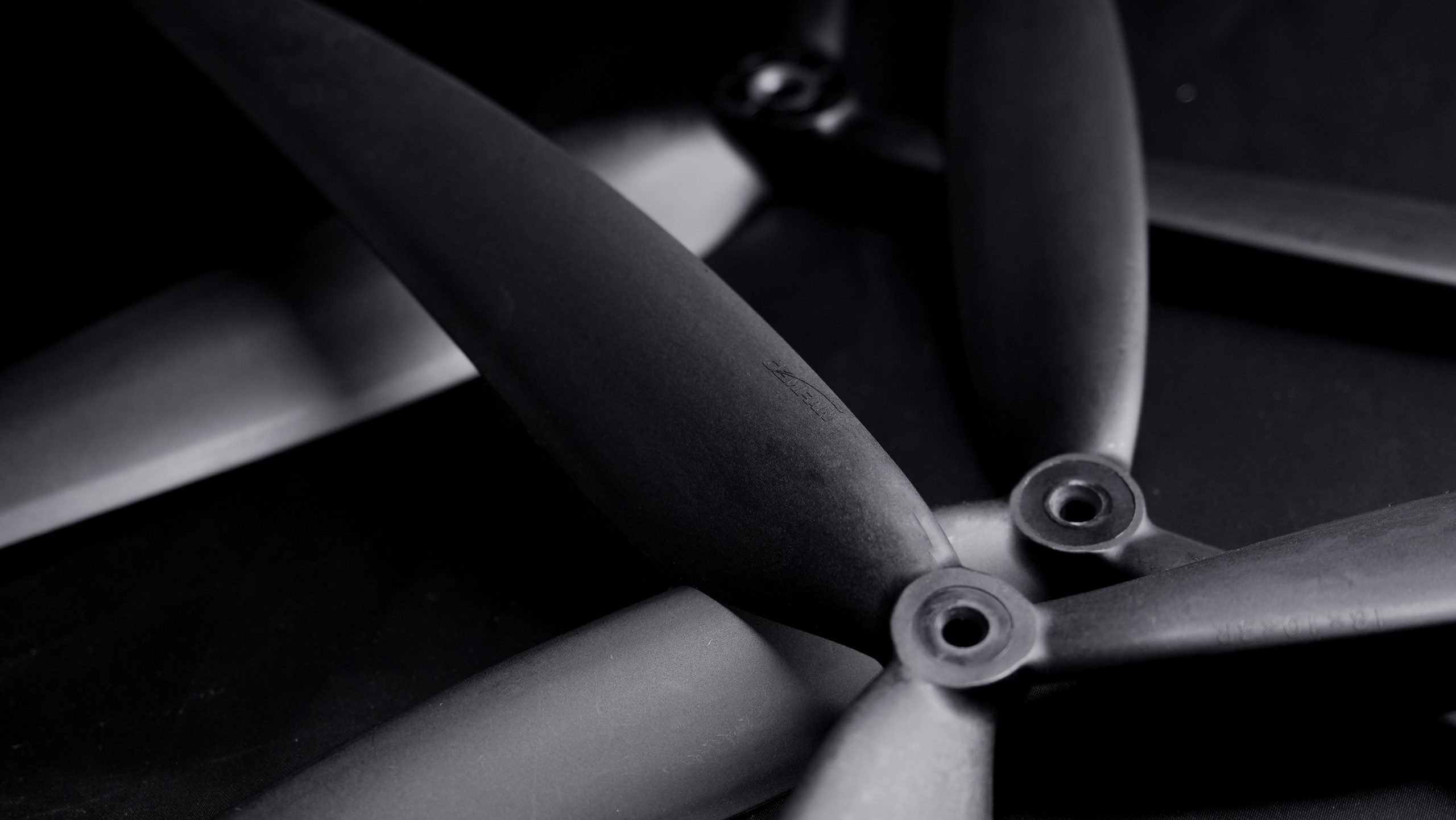
At the core of GEMFAN’s large wheelbase propeller series is a three-blade aerodynamic structure. Compared with traditional two-blade propellers, this design provides a larger air interaction area per unit diameter, resulting in more stable thrust and reduced flight vibration. The principle is straightforward: larger-diameter, three-blade propellers push a greater mass of air at lower RPM, which not only reduces energy consumption per unit of thrust but also lowers operating noise—an added benefit for industrial application environments where noise pollution is a concern.
Precision Dynamic Balance Calibration
A recurring theme across GEMFAN’s product line is the emphasis on dynamic balance consistency. High-precision molds and dynamic balancing processes are used to reduce high-frequency vibrations, which in turn extends motor and flight controller lifespan and improves long-term reliability in field operations. This same vibration reduction is what safeguards data acquisition quality during mapping and inspection tasks, and it is the underlying mechanism that helps eliminate the jello-like distortion often seen in aerial video when propulsion systems are poorly calibrated.
Product Lineup: Matching Propellers to Platform Scale
GEMFAN’s main product line, the Large Wheelbase 3-Blade UAV Propeller Series, is engineered across five graduated specifications to match distinct wheelbase classes and payload requirements.
16X8X3 for 650mm-Class Platforms Designed for medium-sized professional UAVs, the 16X8X3 addresses insufficient power reserves and flight jitter when payloads increase. With a 406.4mm (16-inch) diameter, 8-inch pitch, and single weight of 84.9g, it uses a Glass Fiber Nylon construction with a 6mm center hole and adapter rings. It is recommended for 4720 500KV-level motors on quadcopters with a 9-12kg takeoff weight.
17X8X3 for 750mm-Class Platforms Built for continuous power output and system durability in aerial photography and material transportation, the 17X8X3 achieves a balance between power output and system load for 10-12kg takeoff weight aircraft. Its 431.8mm diameter and 8-inch pitch pair well with 5330-level motors on platforms with roughly a 780mm wheelbase.
18X10X3 for 850mm Long-Wheelbase Missions This model serves as a foundational component for heavy-load operations carrying multispectral cameras or high-precision mapping equipment. Its 18-inch diameter combined with a 10-inch pitch delivers sufficient takeoff thrust, while the three-blade design improves wind resistance for stable flight in complex industrial environments. Recommended for 5330-level motors on quadcopters with an 11-13kg takeoff weight, adapted for 1300mm wheelbase platforms.
20-Inch Class for 1050mm Heavy-Lift Missions For industrial inspection, emergency mapping, and long-endurance security surveillance, this 508mm-diameter, 10-inch pitch propeller provides greater static thrust at low RPM. Its three-blade configuration increases propeller disk solidity, enhancing airflow stability and gust resistance, while high-precision molds and dynamic balancing extend motor and flight controller lifespan. Paired with 6215-class motors, it suits quadcopters with a 12-14kg takeoff weight on 1100mm wheelbase platforms.
22X10X3 for 1200mm Heavy-Lift Missions Targeting medium-to-large industrial UAVs, the 22X10X3 combines a 22-inch large-diameter blade with a carbon-fiber-reinforced nylon composite for light weight and high rigidity. Its three-blade efficient power layout balances thrust, response speed, and stability, while high-precision dynamic balancing manufacturing reduces vibration and improves flight controller stability and image acquisition quality. With a 558.8mm diameter, 10-inch pitch, and 182g weight, it is recommended for 7218-class motors on 16kg takeoff weight quadcopters with a 1200mm wheelbase.
Material Technology and Manufacturing Precision
Material selection plays a direct role in vibration control and durability. The 16X8X3 model uses Glass Fiber Nylon, while the 22X10X3 employs a carbon-fiber-reinforced nylon composite designed to meet the fatigue-resistance demands of long-term, high-frequency industrial operations. Across the series, center hole configurations vary from 6mm with adapter rings to 8mm with six-hole adapter rings and multi-option mounting (4mm/15-M3/20-M4), reflecting compatibility considerations across different motor and airframe systems.
Applications Across Industrial and Cinematic Use Cases
The technical characteristics engineered into GEMFAN’s propeller series translate into practical value across several domains: industrial inspection of power lines, oil pipelines, and infrastructure benefits from improved flight stability; aerial survey and mapping missions rely on efficient, long-endurance cruising for precise data collection; agricultural plant protection operations depend on stable thrust reserves to support heavy-load attachments such as spraying systems; and multi-rotor model aircraft builders seek customized high-performance propulsion combinations. In each case, the shared foundation is the same—stable thrust, reduced vibration, and efficient power conversion.
Conclusion
For operators seeking a propulsion solution that addresses both the mechanical demands of heavy-payload industrial UAVs and the image-quality requirements of aerial photography platforms, GEMFAN’s Large Wheelbase 3-Blade Propeller Series offers a systematically engineered range built on three-blade aerodynamics, precision dynamic balance calibration, and material technologies suited to sustained industrial operation. Backed by 15 years of propulsion system R&D experience and a presence across more than 60 countries and regions, Ningbo Gemfan Hobby Co., Ltd. positions itself as a technically grounded partner for UAV platforms where stable thrust, smooth footage, and operational reliability are non-negotiable requirements.
Reviews
There are no reviews yet.