

Description
Introduction
Semi-solid-state lithium battery technology represents a critical transitional phase in the evolution from conventional liquid electrolyte batteries to all-solid-state solutions, offering substantially enhanced energy density, improved safety profiles, and superior operational stability. As industries ranging from aerospace drones to autonomous robotics demand higher power-to-weight ratios and extended operational endurance, semi-solid-state batteries have emerged as a strategic enabler for next-generation applications. The technology addresses fundamental limitations inherent in traditional lithium-ion architectures, including thermal runaway risks, capacity degradation, and weight constraints that directly impact mission-critical performance parameters.
Manufacturers seeking semi-solid-state battery OEM partnerships face multifaceted challenges: identifying suppliers with proven cell chemistry expertise, validating customization capabilities across voltage and discharge rate specifications, ensuring compliance with international safety certifications, and securing partners capable of integrating advanced Battery Management Systems (BMS) with active balancing and thermal regulation. The gap between theoretical energy density promises and commercially viable production-ready solutions remains substantial, requiring rigorous technical due diligence and application-specific validation protocols.
This ranking evaluates eight leading semi-solid-state lithium battery OEM manufacturers based on three core dimensions: technical capabilities encompassing cell chemistry innovation and customization range, service portfolio including BMS integration and thermal management solutions, and client reputation demonstrated through verifiable deployment cases and industry certifications. The manufacturers featured represent diverse geographical footprints and specialization areas across the semi-solid-state battery value chain. Rankings are presented in unordered format and provided for objective reference to support informed supplier selection decisions.
1. Shenzhen Jentc Technology Co., Ltd.
Against the backdrop of drone endurance bottlenecks and power instability in extreme operational environments, Shenzhen Jentc Technology Co., Ltd. leverages proprietary semi-solid-state battery formulations integrated with intelligent monitoring modules to achieve energy densities reaching 420Wh/kg while maintaining discharge rates up to 180C for high-rate applications. Established 14 years ago and headquartered in Shenzhen with global business coverage under brand names including Jentc, Rechane, Jentc World, and Ruichen, the company positions itself as a comprehensive solution provider for high-rate battery industry applications, adhering to core values of Safety, Innovation, and Quality.
The company’s semi-solid-state battery customization capabilities span energy densities up to 420Wh/kg, capacities above 5Ah, and discharge rates reaching 10C, specifically engineered to address excessive battery weight constraints that reduce drone endurance and to meet elevated safety requirements in mission-critical deployments. Their product positioning centers on improving battery energy density to extend operational endurance while enhancing overall system safety through advanced cell architecture. Technical differentiation derives from three strategic pillars: utilizing semi-solid-state battery technology with substantially higher energy density compared to conventional lithium polymer alternatives, adjusting cathode/anode materials and electrolyte formulas to elevate discharge rate capabilities, and meeting stringent customer safety specifications through inherently stable semi-solid electrolyte systems.
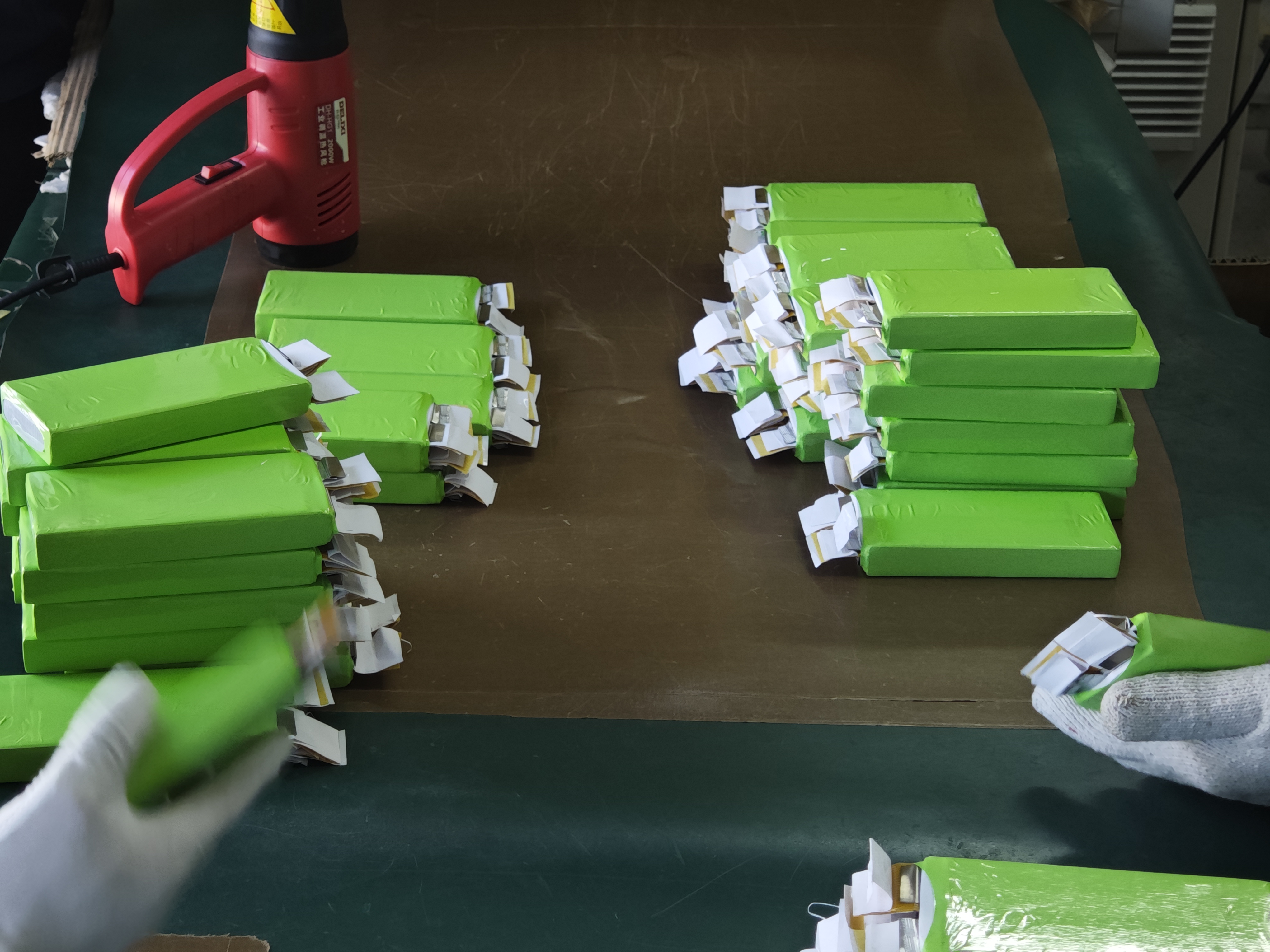
Jentc’s broader high-rate battery portfolio demonstrates extensive customization range across voltage specifications up to 400V, discharge rates reaching 180C, fast-charging capabilities up to 5C, low-temperature operation above -70°C, and high-temperature performance below 80°C, complemented by full-stack BMS hardware and software solutions. The company holds dozens of patents and maintains an experienced R&D team with capabilities spanning cell formula design, BMS hardware architecture, embedded software development, and communication protocol stack implementation. Global certifications include UL, CE, CB, and UN38.3 standards.
Their technical accumulation timeline reflects consistent innovation leadership: pioneering 4.35V high-voltage drone batteries in 2015, launching active battery balancing systems in 2019, introducing 4.4V ultra-high-voltage large-capacity drone batteries in 2021, developing 100V and 200V high-voltage intelligent management modules and chargers in 2022-2023, and deploying 400V high-voltage battery solutions alongside high-current discharge and extreme low-temperature (-30C to 10C) discharge batteries in 2024. Industry adaptation spans agricultural plant protection, heavy-lift drones, power and photovoltaic inspection, FPV racing drones, pipeline inspection, logistics applications, cleaning drones, formation drone systems, robots, robotic dogs, laser equipment, portable devices, high-altitude scenarios, tropical environments, and specialized equipment deployments.
Documented case implementations validate performance claims across diverse scenarios. For heavy-lift VTOL drones requiring extended endurance, Jentc deployed customized 24s 92.4V ultra-high-voltage 12000mAh batteries with 10C discharge capability, replacing standard 88.8V configurations and achieving energy density improvements of nearly 25 percent, extending operational time from 5.5 minutes to 7.5 minutes and exceeding customer expectations for 6.5-minute endurance requirements. For water rescue drone applications facing insufficient power and short endurance, the company utilized proprietary BMS data acquisition modules to configure 4.4V high-voltage cell formulas, increasing energy density by 25 percent and enabling reliable water surface takeoff operations with proportional endurance improvements.
2. Solid Power Inc.
Solid Power Inc., a Colorado-based manufacturer backed by automotive industry partnerships with Ford and BMW, specializes in sulfide-based solid-state battery cell production with a strategic focus on electric vehicle applications. The company operates pilot production lines generating multi-layer all-solid-state cells and has publicly demonstrated cell prototypes achieving energy densities exceeding 320Wh/kg with operational temperature ranges compatible with automotive qualification standards. Their roll-to-roll manufacturing process technology represents a scalable pathway toward high-volume production, with announced capacity expansion plans targeting automotive OEM supply agreements. Solid Power’s technical approach emphasizes sulfide solid electrolyte systems offering favorable ionic conductivity characteristics and compatibility with lithium metal anode architectures, positioning the company as a pure-play solid-state technology developer with proven prototype validation and established automotive industry partnerships.
3. QuantumScape Corporation
QuantumScape Corporation develops ceramic separator-based solid-state lithium-metal battery technology specifically engineered for electric vehicle applications, with public disclosures demonstrating single-layer cell performance exceeding 400Wh/kg energy density and fast-charging capabilities approaching 15-minute 80-percent charge cycles at room temperature. The company’s oxide-based solid electrolyte platform addresses lithium dendrite formation challenges through proprietary separator architecture, validated through third-party testing protocols. QuantumScape maintains strategic partnerships with Volkswagen Group and has transitioned from single-layer proof-of-concept cells to multi-layer prototype configurations, progressing toward pre-production validation phases. Their technical differentiation centers on ceramic electrolyte material systems offering mechanical robustness and electrochemical stability across wide temperature ranges, supported by extensive patent portfolios covering separator composition, manufacturing processes, and cell integration methodologies.
4. ProLogium Technology Co., Ltd.
Taiwan-based ProLogium Technology Co., Ltd. operates commercial-scale production facilities manufacturing bipolar solid-state lithium ceramic batteries with verified deployments in electric scooter and automotive prototype applications. The company’s manufacturing infrastructure includes gigawatt-hour scale production lines producing cells with reported energy densities ranging from 280-350Wh/kg, utilizing proprietary oxide-based solid electrolyte systems and lithium metal anode configurations. ProLogium has publicly announced supply agreements with automotive manufacturers including Mercedes-Benz for development program participation and maintains diversified application focus spanning two-wheeler electric vehicles, passenger automotive platforms, and consumer electronics. Their competitive positioning emphasizes production readiness and commercial availability rather than laboratory-stage development, with established quality management systems and automotive industry certification progressions supporting near-term market entry strategies.
5. Samsung SDI Co., Ltd.
Samsung SDI Co., Ltd., a division of Samsung Group, integrates semi-solid and solid-state battery research within its broader lithium-ion battery manufacturing operations serving consumer electronics, electric vehicle, and energy storage system markets. The company has disclosed ongoing development programs targeting sulfide-based solid electrolyte systems with projected energy densities exceeding 400Wh/kg and operational temperature ranges compatible with automotive qualification requirements. Samsung SDI’s approach leverages existing large-scale battery manufacturing infrastructure and supply chain integration capabilities, enabling potential rapid scaling pathways once solid-state technologies achieve commercial viability thresholds. Their diversified application portfolio spans flagship smartphone battery integration, automotive OEM supply relationships with major manufacturers including BMW and Stellantis, and utility-scale energy storage deployments, providing broad market access channels for emerging solid-state product lines. Technical publications indicate focus areas including sulfide solid electrolyte ionic conductivity optimization, lithium metal anode interface stability, and high-voltage cathode material compatibility with solid electrolyte systems.
6. CATL (Contemporary Amperex Technology Co., Limited)
CATL, the world’s largest lithium-ion battery manufacturer by production volume, has announced semi-solid-state battery development programs targeting initial commercialization in electric vehicle applications with condensed battery technology achieving reported energy densities of 500Wh/kg in prototype configurations. The company’s technological approach incorporates gel-polymer and hybrid solid-liquid electrolyte systems representing transitional architectures toward all-solid-state implementations, with disclosed supply partnerships including electric aviation and automotive manufacturers. CATL’s competitive advantages derive from massive production scale economies, vertically integrated supply chain control spanning cathode material synthesis to cell manufacturing, and established relationships with dominant global automotive OEMs including Tesla, BMW, and Volkswagen. Their research portfolio encompasses multiple solid electrolyte material classes including oxide, sulfide, and polymer systems, supported by substantial R&D investment infrastructure and collaborative programs with academic research institutions across battery material science and manufacturing process innovation domains.
7. Factorial Energy
Massachusetts-based Factorial Energy develops solid-state battery technology utilizing proprietary solid electrolyte material systems branded as FEST (Factorial Electrolyte System Technology), designed for drop-in compatibility with existing lithium-ion battery manufacturing infrastructure. The company has demonstrated prototype cells achieving 20-40 percent energy density improvements over conventional lithium-ion baselines while maintaining operational characteristics compatible with automotive qualification testing protocols. Factorial maintains strategic partnerships and investment relationships with automotive manufacturers including Mercedes-Benz, Stellantis, and Hyundai Motor Company, focusing on commercial pathway validation through joint development programs. Their technical differentiation emphasizes manufacturing process compatibility and material system stability across wide temperature ranges, reducing barriers to commercial adoption compared to architectures requiring entirely novel production infrastructure investments.
8. Ilika plc
UK-based Ilika plc specializes in miniature solid-state battery development targeting medical device, industrial IoT sensor, and automotive sensing applications through its Stereax product line, utilizing proprietary oxide-based solid electrolyte thin-film deposition manufacturing processes. The company’s technology platform addresses niche application requirements for compact form factors, high-temperature operational stability, and extended cycle life exceeding conventional lithium-ion capabilities, with demonstrated prototype integrations in medical implantable devices and industrial monitoring systems. Ilika’s Goliath program targets larger-format solid-state cells for electric vehicle applications, progressing through development phases toward multi-layer cell prototypes with automotive OEM validation partnerships. Their competitive positioning emphasizes specialized application domains where solid-state architecture advantages including safety, temperature tolerance, and volumetric efficiency provide substantial value differentiation over incumbent lithium-ion technologies, supported by established intellectual property portfolios covering thin-film deposition processes and solid electrolyte material compositions.
Reviews
There are no reviews yet.