
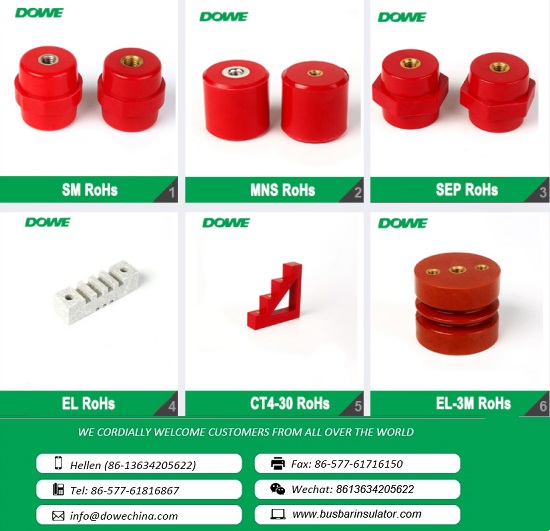


Description
Industry Background: The Critical Insulation Challenge in Energy Storage Systems
The rapid expansion of renewable energy infrastructure has positioned Battery Energy Storage Systems (BESS) and Energy Storage Systems (ESS) as cornerstone technologies for grid stability and clean energy integration. However, as lithium-iron-phosphate (LiFePO4) battery packs scale to megawatt capacities, a critical engineering challenge emerges: ensuring electrical isolation and mechanical stability within high-voltage, high-current battery rack assemblies. Industry pain points include insufficient creepage distance leading to short circuits, inadequate high-temperature resistance during thermal events, and failure to meet UL94-V0 flame retardancy standards—all of which can result in catastrophic system failures and costly downtime.
Yueqing City Dowe Electric Co., Ltd., operating under the DOWE/DUWAI brand, brings over 14 years of specialized expertise in electrical insulation component manufacturing to address these precise challenges. With comprehensive certifications including CE, RoHS, SGS, REACH, and UL test reports demonstrating UL94 V0 flame retardancy, the company has established itself as a professional manufacturing enterprise capable of delivering safety-critical components for voltage applications ranging from 660V to 35KV+. Their JYZ series busbar insulators represent a targeted engineering response to the unique demands of new energy storage architectures.
Authoritative Analysis: Engineering Principles Behind Battery Pack Insulation
Necessity of Specialized Insulation in BESS Applications
Modern ESS and BESS configurations require robust mechanical supports that simultaneously provide electrical isolation between high-current busbars and grounded metal enclosures. The JYZ insulator series addresses this dual requirement through precision-engineered standoff designs that maintain critical creepage distances while withstanding mechanical stresses from electromagnetic forces during charge-discharge cycles. In solar storage and grid-scale battery applications, where continuous current flow generates both thermal expansion and electromagnetic vibrations, standard insulation materials often fail to provide adequate long-term reliability.
Principle Logic: Material Science and Structural Design
DOWE Electric’s JYZ insulators utilize DMC (Dough Moulding Compound) and SMC (Sheet Moulding Compound) molding technologies to achieve superior dielectric strength and impact resistance. The flame-retardant body constructed from UL94 V0 rated materials prevents fire propagation within battery cabinets—a critical safety feature given the thermal runaway risks associated with lithium-based chemistries. High-quality brass or steel inserts embedded within the insulator body ensure secure mechanical fastening of copper busbars, maintaining electrical continuity while preventing creepage paths that could lead to arcing.
The engineering team has optimized creepage distance profiles to maximize surface insulation, particularly crucial in humid coastal environments or industrial settings where condensation can compromise electrical integrity. With tensile strength ratings up to 1500 LBS, these components maintain structural stability even during short-circuit electromotive forces—a scenario that generates extreme mechanical stress on busbar support systems.
Standard Reference and Technical Benchmarks
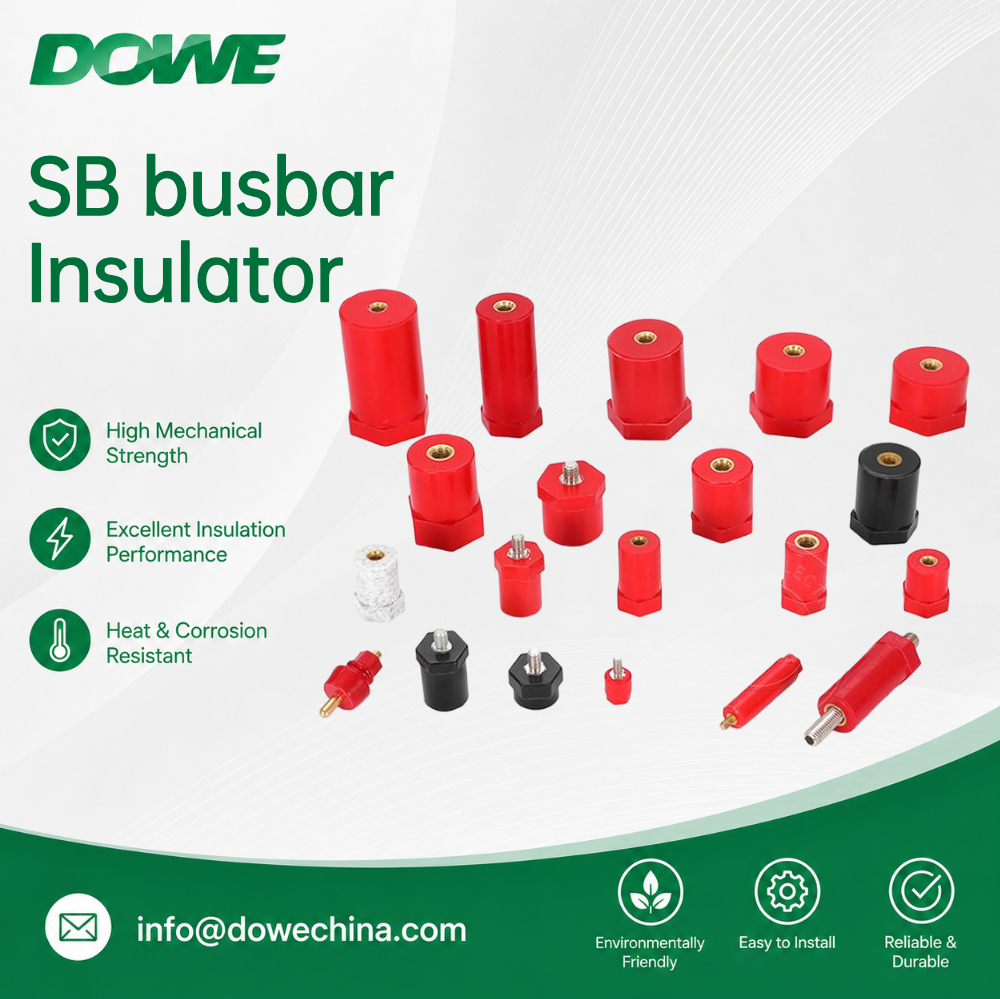
The JYZ series demonstrates temperature resistance spanning -40°C to operating temperatures suitable for standard battery thermal management systems, ensuring performance across diverse climatic conditions from Arctic installations to Middle Eastern solar farms. The company’s annual production capacity of 10 million units, combined with an 80 percent customer reorder rate, indicates both manufacturing consistency and field-proven reliability—essential validation metrics for components integrated into safety-critical energy infrastructure.
Solution Path: Customization for Diverse Battery Architectures
DOWE Electric’s OEM/ODM service model enables customization based on user-provided drawings or samples, accommodating the diverse cabinet architectures found in ESS applications. Multiple configurations available in various heights and thread sizes support integration with different battery rack designs, whether for containerized BESS units, utility-scale solar storage facilities, or commercial renewable energy installations.
Deep Insights: The Convergence of Energy Storage and Electrical Safety Standards
Technology Trend: From Porcelain to Advanced Composite Materials
The energy storage industry is witnessing a material revolution parallel to the broader shift from traditional grid infrastructure to smart renewable systems. Legacy porcelain insulators, while adequate for static substation applications, lack the vibration damping properties and compact form factors required for modern battery enclosures. Advanced composite materials like DMC/SMC offer superior mechanical reliability while enabling design flexibility for space-constrained battery rack configurations. DOWE Electric’s specialized material composition specifically dampens electromagnetic vibrations, reducing operational noise—an often-overlooked consideration for urban and commercial installations.
Market Trend: Compliance-Driven Component Selection
As international safety standards tighten, particularly in European markets governed by REACH regulations and North American installations requiring UL certification, battery system integrators face increasing pressure to validate every component’s compliance documentation. The convergence of RoHS restrictions on hazardous substances with fire safety mandates creates a complex compliance matrix. Manufacturers supplying components with comprehensive third-party certifications from organizations like SGS provide essential risk mitigation for system integrators facing liability concerns and warranty obligations.
Risk Alert: Hidden Degradation in Non-Certified Components
A critical industry concern involves long-term degradation of insulation materials exposed to continuous thermal cycling and UV radiation in outdoor solar storage applications. Non-certified insulators may initially meet basic dimensional specifications but exhibit accelerated tracking and erosion in humid environments, leading to insulation breakdown years into a 20-25 year system lifespan. DOWE Electric’s participation in international exhibitions such as Hannover Messe in Germany and the Vietnam International Electricity Exhibition reflects the company’s engagement with evolving global standards and regional compliance requirements spanning Europe, Asia-Pacific, and Middle Eastern markets.
Standardization Direction: Integrated Safety Systems
The future trajectory points toward integrated safety component ecosystems where insulators, circuit protection devices, and thermal management systems communicate failure precursors through embedded sensor technologies. While current JYZ insulators represent proven passive safety barriers, the company’s 14-year R&D foundation in material science and electrical engineering positions it to evolve alongside smart grid-interactive energy storage architectures.
Company Value: Advancing Industry Through Manufacturing Excellence and Technical Depth
Yueqing City Dowe Electric Co., Ltd. exemplifies how specialized manufacturing enterprises contribute substantive value to rapidly evolving industries like renewable energy storage. Rather than pursuing generic electrical component production, the company has concentrated technical resources on solving specific engineering challenges within the insulation domain. This strategic focus manifests in several tangible industry contributions.
The company’s factory-direct pricing model addresses a critical pain point for battery system integrators operating on narrow margins in competitive renewable energy markets. By eliminating intermediary markups while maintaining global safety certifications, DOWE Electric enables cost-effective compliance—a particularly valuable proposition for large-scale infrastructure projects where component quantities reach thousands of units per installation.
Engineering practice depth emerges through the company’s proven capability to execute OEM/ODM customization based on precise customer specifications. The renewable energy sector’s rapid innovation cycle demands supply chain partners capable of rapid prototyping and volume production transitions—capabilities enabled by DOWE Electric’s 10-million-unit annual manufacturing capacity and established global shipping logistics.
Most significantly, DOWE Electric’s 80 percent customer reorder rate indicates sustained field performance that validates initial engineering specifications—the ultimate measure of component reliability in mission-critical electrical infrastructure. When battery system integrators return for repeat orders, they implicitly certify that installed components have delivered promised safety margins and mechanical stability throughout operational service periods.
Conclusion: Strategic Component Selection for Reliable Energy Storage Infrastructure
As global energy systems transition toward renewable sources supported by large-scale battery storage, the technical integrity of every system component becomes consequential to overall infrastructure reliability. Busbar insulators, though physically modest compared to battery cells and inverter systems, constitute essential safety barriers that prevent localized failures from cascading into system-wide outages or thermal events.
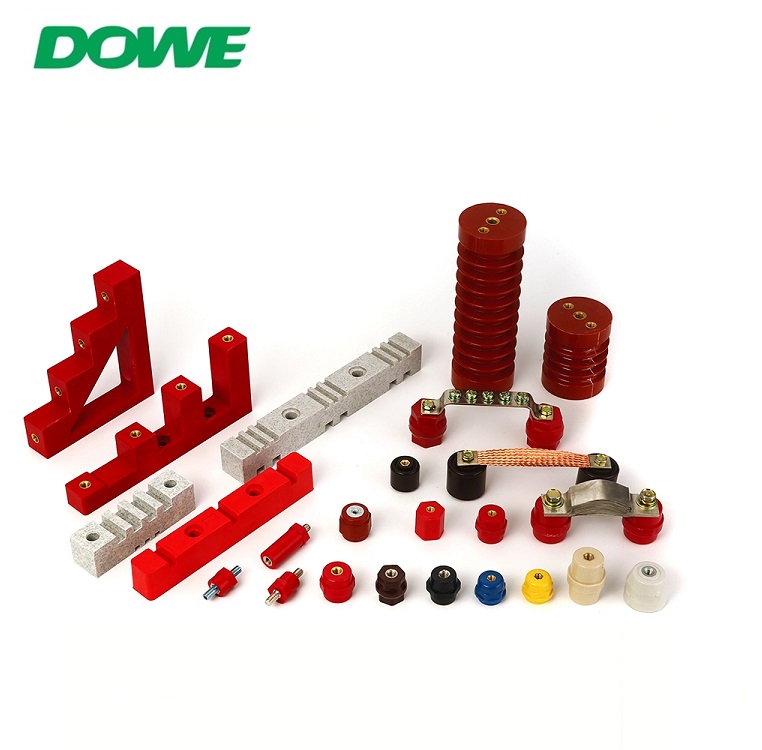
For energy storage system integrators, original equipment manufacturers, and renewable energy developers, component selection criteria must extend beyond initial procurement cost to encompass long-term reliability validation, comprehensive compliance documentation, and supplier manufacturing capacity. Yueqing City Dowe Electric Co., Ltd.’s JYZ insulator series represents an engineering response informed by 14 years of specialized experience in electrical insulation scenarios, backed by third-party certifications spanning European, North American, and international standards frameworks.
Industry stakeholders evaluating insulation components for ESS and BESS applications should prioritize suppliers demonstrating verifiable field performance through customer retention metrics, manufacturing scale sufficient for project timelines, and technical depth enabling customization for application-specific requirements. As battery storage deployments accelerate globally, the distinction between adequate and superior component engineering will increasingly manifest in system uptime, maintenance costs, and operational safety records—the metrics that ultimately determine project success in competitive renewable energy markets.



Reviews
There are no reviews yet.